Pages

Showing posts with label Marie Curie. Show all posts

Friday, 12 May 2017

'It's Very Much Worth the Effort'

Dr Richard Guest
Marie SkÅ‚odowska-Curie Innovative Training Networks (ITNs) are one of the most popular schemes within Horizon 2020, and it’s easy to see why: they offer an opportunity for the recruitment of talented early career researchers to be trained in any discipline, whilst also enabling them to flex their wings across national and sectoral boundaries.

However, this popularity comes at a cost, and the success rates for them can make bleak reading. A perfect opportunity, then, to hear from a successful applicant about what’s involved and how best to prepare for the ‘trial by resubmission.’

Dr Richard Guest, from the School of Engineering and Digital Arts, has just received funding for AMBER (enhAnced Mobile BiomEtRics), an ITN that addresses a range of current issues around biometrics on mobiles, and stretches across five universities and seven industrial partners.

Thursday, 13 April 2017

Grants Factory: Applying for Marie Curie ITNs

2-4pm, Wednesday 10 May 2017
Venue: TBC

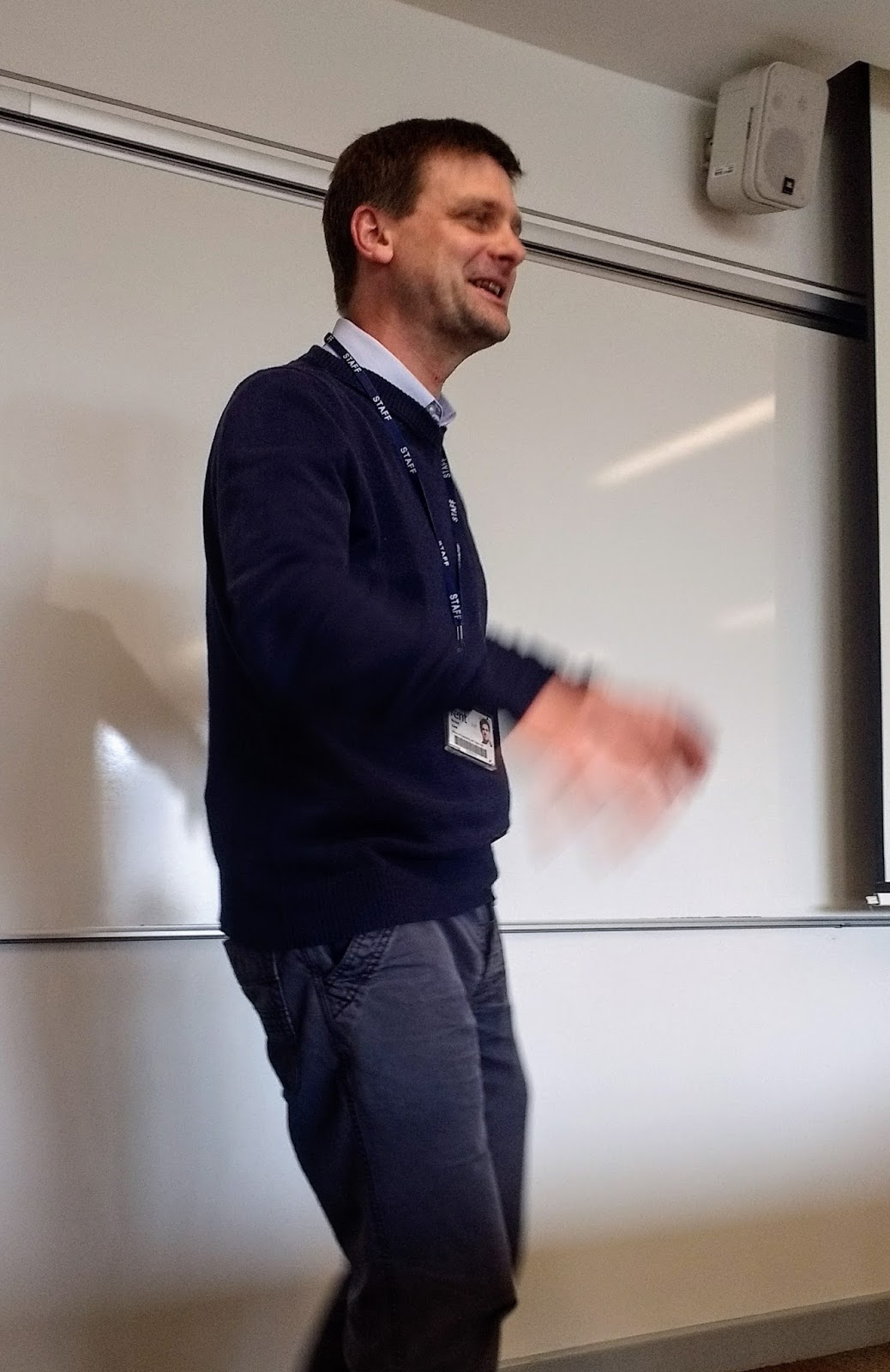
Dr Richard Guest
Marie Curie Innovative Training Networks (ITNs) provide funding for doctoral training programmes run jointly between a number of institutions across Europe. They run for up to 4 years and are worth up to €4.5m. There is no limit to the disciplines which can apply, and the University currently has six ITNs running. One of these is Enhanced Mobile Biometrics (AMBER) in EDA, led by Dr Richard Guest.

The next call is due to open in the autumn with a deadline early in the New Year. Despite the triggering of Article 50 UK universities can still apply, and the Treasury has agreed to underwrite any grants that have been approved at the point the UK leaves the EU in March 2019. Richard has kindly agreed to talk about his experience of applying for these complex grants, what worked for him, what he would have done differently, and what people should bear in mind when starting to develop the collaborations.

The session is free and open to all, and tea and coffee will be provided. However, do drop me a line to let me know that you plan to come. 

Monday, 16 April 2012

Events of May

It's like 1968 all over again. Sort of. Well, a lot of the events we've got planned may well mark 'the beginning of a prolonged struggle'. But be brave! Come along to one of the many events we've got planned, and we'll help you in the (funding) struggle. All are free, there are refreshments, and all staff are welcome, but do let me know if you would like to attend any or all of them so that I can get an idea of numbers.


4 May: UKRO VISIT
  •  European Research Council Starting Grants (Keynes LT3, 12:30 -2pm) The next round of European Research Council Starting Grants is due to open in July, with deadlines early in the new year. These grants are very generous, offering those with 2-12 years postdoc experience up to €1.5m for 5 years. Competition is fierce, but success rates are on a par with those for Research Councils. Jo Frost, our Brussels’ UK Research Office (UKRO) rep, will provide an insight into these grants, and Funding Officers will be on hand to offer practical advice about
  • Marie Curie Fellowships (Keynes LT3, 2pm – 3:30pm) Jo Frost will follow up her ERC talk by providing more information on the Marie Curie Fellowships. These are intended to encourage mobility for researchers within Europe. They can be on an individual basis, or as a network. The MC schemes are popular, and they have recently been revised by the EC. Jo will tell us more about these changes, and what the Commission has planned for the next Framework Programme.
9 May: EUROPE DAY
  • PVC LUNCHTIME SEMINAR: ‘Europeanisation’ (Peter Brown Room, Darwin, 12:30-2pm) To mark Europe Day a special PVC’s Lunchtime Seminar will look at ‘Europeanisation.’ The Seminars offer a chance to find out about what research is happening across the University, and to meet others outside your School. The speakers are:  
Simone Glanert (Law):How ‘Common' Is a Common Law Without a Common Language and a Common Discourse: (Uncommon) Thoughts on the European Union’.
Ben Hutchinson (SECL): ‘International Challenges for National Archives’.
Roger Vickerman (Economics): ‘Economic integration through regional and transport policies in Europe’.
Paolo Dardanelli (Politics & IR): ‘European integration, party strategies, and state restructuring’.
  • GRANTS FACTORY: ‘Eurovision: the Pros and Cons of European Funding’ (Peter Brown Room, Darwin, 2pm-3:30pm) This is a rerun of last year’s sell-out seminar  that offers a warts and all view of the European funding. The EC is notorious for the complexity of its applications, but unlike the UK funding for research is ringfenced and growing. Jenny Billings (CHSS) and Simon Thompson (Computing), both veterans of EU funding, offer their insights into the highs and lows of applying for, managing and reviewing  European applications. Places are limited, so book early. 

10 May: UNDERSTANDING & APPLYING TO THE NATIONAL INSTITUTE OF HEALTH (NIHR) (Senate Building, 10am-4:30pm) Government funding for health-related research is distributed by the MRC and the NIHR. The MRC deals with basic research, the NIHR with research that will affect the NHS, including social care and public health research. Last year it gave out £210.5m of research grants through a range of programmes. This event will be a chance to understand how these differ and fit together. The programme will include talks by members of NIHR, as well as those who have had NIHR funding, and have helped with applications in the past. The full programme can be seen on the blog, here.

30 May: GRANTS FACTORY: Writing Better Bids (Venue TBC, 10am-12pm) This perennial favourite runs three times a year, and provides those attending with an overview of what makes a good application, and how to draft your application so that it is clear, readable and convincing. David Shemmings provides insights based on the ’Grants Factory’ method developed by Prof Andrew Derrington (formerly Dean of Social Sciences, now PVC at Liverpool) and Jacqueline Aldridge.  These are always well attended; book now if you’re planning to draft a proposal.
Tuesday, 14 February 2012

The End is Nigh

And now, the end is near....yes, we're in to the final stretch of FP7, and we're beginning to get notification of the last of the deadlines. Dry your tears, and start preparing those applications. Here are the provisional details of the last round of Marie Curie grants:
  • Initial Training Networks: 22 November 2012
  • Researchers' Night: 10 January 2013
  • International Research Staff Exchange Scheme: 17 January 2013
  • COFUND: 5 December 2012
  • Career Integration Grants: 7 March 2013 and 5 September 2013
  • Industry-Academia Partnerships and Pathways: 15 January 2013
  • Intra-European Fellowships: 14 August 2013
  • International Incoming Fellowships: 14 August 2013
  • International Outgoing Fellowships: 14 August 2013

Saturday, 9 July 2011

New Marie Curie Schemes

Two new pilot schemes will be introduced for the next round of Marie Curie Actions, due to be published on 20 July. They are intended to fill a perceived gap in the provision of training for early stage researchers (ESRs).
  • Innovative Doctoral Programmes (IDPs). This replaces the ‘Monosite Initial Training Networks (ITNs)’, and aims to encourage crossovers between disciplines, sectors and states. Whilst there are plenty of doctoral schools across Europe, it's relatively rare to see ones with genuinely international, interdisciplinary, cross-sectoral programmes. The IDP is intended to rectify this.
  • European Industrial Doctorates (EIDs). This is intended to encourage companies to get involved in doctoral training. The EID should involve at least two participants (one from each sector), and possible associated partners in any sector/discipline/country. Each researcher must be enrolled in a doctoral programme, be employed by at least one of the participants, spend at least 50% in private sector, and be jointly supervised by both participants. There should be 1-5 researchers per project.
There is considerable flexibility in the new schemes, but if all goes according to plan there will be even more flexibility in Horizon 2020. The EC is intending to simplify the current range of eight Marie Curie schemes into four broad schemes (as mentioned in an earlier post):
  • A scheme for early stage researchers (i.e. doctoral students): this would allow a host institution to put in place a network for providing training for doctoral students from across Europe;
  • A scheme for more experienced researchers: this would provide individual fellowships to encourage mobility and career development opportunities;
  • A scheme for research staff: a smaller fund for short term exchange and secondments between institutions.
  • A scheme to match fund national fellowship schemes: this would be see the continuation of the 'cofund' scheme.
Part of this push has come from the responses to the consultation on the FP8 Green Paper, in which there was a specific question about strengthening and promoting research mobility (question 23). 70% of respondents considered Marie Curie to be important, but felt that it needed a higher budget, more collaboration with business, and more streamlining.

Thursday, 17 February 2011

The Future of Marie Curie after 2013

UKRO has been listening to Dr. Georges Bingen, Head of the Marie Curie Actions Unit, speak about the future of the Marie Curie actions. As some of you know, Marie Curie actions are fellowships intended to encourage movement of researchers in Europe. Whilst popular and successful, the actions have been criticised for being overly complex.

Dr Bingen suggested that, after 2013, they could be streamlined so that there were just three:

  • one for early stage researchers (ESRs), which would be a development of the current Initial Training Networks (ITNs). Industrial participation would be crucial for this scheme.
  • one for experienced researchers (ERs), which would possibly merge the three current Individual Fellowship schemes: the Intra-European Fellowships Scheme, the International Incoming Fellowships Scheme and the International Outgoing Fellowships scheme.
  • and one for staff exchanges, which would be a single, more open integrated programme allowing for collaboration/exchanges across sectors and between countries inside and outside of the EU.
As with research funding more generally after 2013, Marie Curie will have to fit squarely within the vision of an 'Innovation Union'. Finally, there is likely to be a focus on ‘alumni services’: there have been 50,000 Marie Curie fellows since 1996, and there is currently no central database of all of them. Again, this is likely to be initiated in the 2012 People Work Programme.


Wednesday, 18 August 2010

Free Marie Curie Info & Proposal Writing Event

I don't know, you wait ages for one free European funding training event, and then three come along at the same time...Following on from the announcement of UKRO workshops on the ERC Starting Grants and FP7 Proposal Writing, they have added an event on the Marie Curie Initial Training Networks (ITN) and Industy-Academia Partnerships and Pathways (IAPP). It will be an opportunity to both learn more about these schemes, but also to get some tips on writing a proposal for them. Venues and dates as follows:
  • Invest Northern Ireland, Belfast: 10 Sept
  • Aston University, Birmingham: 17 Sept
  • Royal Society, Edinburgh: 20 Sept
  • Natural History Museum, London: 28 Sept

The event is free for UKRO subscribers (of which Kent is one). Places are allocated on a first come first served basis, so be quick and put your name down here.

Monday, 5 July 2010

Talking of Marie Curie...

I attended an interesting session on the Marie Curie Fellowships last week at the UKRO Conference. It was interesting to get some insights into how the UK's done with these. Here are some stats, with the overall success rates for all countries first, and then the success rates for the projects that involve the UK second:
  • Initial Training Networks (ITNs): Overall: 7%; UK: 16%
  • Intra-European Fellowships (IEFs): Overall: 24%; UK: 30%
  • European Reintegration Grants (ERGs): Overall: 65% (!); UK: 57%
  • International Reintegration Grants (IRGs): 67% (!!); 78% (!!!)
  • Industry-Academia Partnerships & Pathways (IAPPs): Overall: 16%; UK: 20%
  • International Outgoing Fellowships (IOFs): Overall: 20%; UK: 29%
  • International Research Staff Exchange Scheme (IRSES): Overall: 65%; UK: 66%
  • International Incoming Fellowships (IIFs): Overall: 15%; UK: 18%
  • Co-Funding of Regional, National & International Programmes (COFUND): Overall: 66%; UK: 100% (though that was one application out of one).
One other interesting stat (and apologies for sounding like I'm obsessed with numbers here): for the Intra-European Fellowships, which fund movement between member states within the EU, the UK hosts 37% of all fellows, and yet sends out only 4%. Is this down to the UK being a world class centre for academic research, or just down to our poor language skills? I'll let you decide...

Changes to Marie Curie Fellowships

Changes are afoot on the European Commission's flagship Marie Curie Fellowships, which encourage mobility of researchers within the European Research Area (ERA) - or, in their own words, to retain, repatriate, and recruit. Two of their schemes - the European Reintegration Grants (ERGs) and the International Reintegration Grants (IRGs) - are going to be amalgamated into a single scheme to be called the 'Career Integration Grants' (CIG). The aim will be on the 'repatriate' part of the MC's three Rs, and will encourage researchers to return to the ERA. The restriction that used to apply to ERGs - that only former MC Fellows could apply - will be lifted, and the scheme will look more like the IRGs. The first call is due 20 October 2010, with a deadline of 8 March 2011, so if you know someone who would fit the bill and could benefit from this funding, encourage them to look at the Cordis call page.

Friday, 16 October 2009

Marie Curie: Self Evaluation Tool

The EC has prepared a 'self evaluation tool' for anyone applying to the latest round of the Initial Training Networks (ITNs). It is based on the form given to assessors when the application is submitted.
Good idea!
But will applicants be ready for another form when they've completed the marathon of forms necessary for the application itself? I hope so; it would be good to assess the application prior to submission, and pick up on any shortcomings and weaknesses now rather than months down the line, with the rejection letter.

Monday, 28 September 2009

Marie Curie: Applications Up 40%

Away from RCUK, other funders are feeling the pressure of increased applications. The European Commission's Marie Curie individual fellowships, which closed on 18 Aug, have received 40% more applications. UKRO are reporting that success rates are likely to tumble.