Pages

Showing posts with label research councils. Show all posts

Tuesday, 28 January 2020

Pathways to 50 Shades of Grey

The basement of Death Star House
(Photo by Víctor Jesús Carrasco)
The news that the Pathways to Impact attachment was being dropped from Research Council applications was met with disbelief this week. But the true reason for the change is far stranger than anyone imagined...
______________________

Friday, 19 January 2018

UKRI: the Movie

The poster for the new movie, to feature John Kingman


Well, it's all become clear.

The secrecy, the spiralling budget. The recruitment of John Kingman. For a long time UKRI just didn't make any kind of sense.

But this evening, all has been revealed. 20th Century Fox has announced that it has been in talks with the UK government over the third in the Kingsman spy series, to be based around a shady and little understood but extremely powerful organisation that controls every element of society.

Monday, 16 May 2016

Real Call or Bugger All?

Some of you will have whiled away a slow afternoon playing with the Research Council Priority Generator.

Well, in this world of Facebook quizzes, it seemed foolish not to test your knowledge properly. Luckily, the wonderful Laura Shockley stepped up to the mark and together we offer you the 'Real Call or Bugger All?' quiz.

So are you a Research Support ninja, or still making your way as an apprentice or commis chef? There's only one way to find out...


Friday, 18 March 2016

Feeding Piranhas and Living to Tell the Tale

The Researchfish system is used to collect information on the outputs, outcomes and impacts that have arisen from Research Council-funded research. It tracks over 90,000 awards worth more than £40 Billion, and is used by over 63,000 researchers who have produced in excess of 1 million output reports to date. 

Submitting data on such a wealth of projects is no easy task, and universities across the UK have been making sure that their investigators provide these by the current deadline. At Kent, the job of ensuring its compliance fell to Sue Prout, Research Services Clerical Officer and PA to the Director of Research Services. Below she gives an insight into the challenges she faced in this unenviable task.

____________________________________________

Friday, 20 November 2015

Seven Brains, One Body

The Nurse Review presented its report yesterday, and a key recommendation was the creation of  'Research UK', which would have overall responsibility for the Research Councils. One way the new structure could be described was 'seven brains, one body,' Sir Paul said.

Now read on.
__________

Scene 1: A laboratory in a castle. A storm is blowing outside. Lightning flashes and lights up a crazy-haired scientist at work, making adjustments to a large, complicated and antiquated piece of machinery. In front of him is a corpse clearly pieced together with rudimentary stitching. 

Sir Paul Frankenstein (for it is he): Ah-ha! Finally my dream is about to be realised! They said I couldn't do it but they were wrong! I have created the Single Accounting Officer! Ha! Ha! Ha! Ha!

Wednesday, 9 July 2014

Equalising Research

Earlier this year, Research Councils UK published data on the ages and sex of people who applied for grants between 2010 and 2013. There was a large discrepancy between the sexes in the success rate for large grants: men, on average, had a 38 per cent chance of success; for women, it was 24 per cent. The trends were more mixed for standard grants, but men almost always had a higher success rate than women.

RCUK also published the gender composition of its peer-review panels, councils, boards and committees. Startlingly, the strategic bodies were, on average, 73 per cent male. The composition of the peer-review panels was a little better (69 per cent male), with some councils, such as the Arts and Humanities Research Council and the Economic and Social Research Council, edging closer to even (58 and 52 per cent male, respectively). 

Are these two findings linked? Does a male-­dominated panel rule disproportionately in favour of men? After all, the ESRC, which has the most even-gendered panels, has bucked the trend, giving women a higher success rate for 2 of the past 3 years. But association is not causation. To say there’s a strong causal link would be to do the research councils and the panelists a disservice. From my time at the AHRC, I know that the council strives to be fair and to use excellence as the primary criterion in deciding on applications.

Tuesday, 17 December 2013

Creative Visualisation

Lifting the lid on visualisation
The AHRC has launched a competition for 'designers, graphic artists, software developers, programmers and anyone with an interest in data visualisation' to design graphs and maps showing how grants from the UK’s seven research councils are distributed.

This follows the launch of the excellent Gateway to Research database, which holds information on all the projects that have been funded by the Research Councils.

Whilst, of course, both the database and the visualisation initiative are to be applauded, I can't help but feel that the AHRC is missing a trick here. After all, it is responsible for a huge range of disciplines, and it should be encouraging all, in every discipline (and of course, across-trans-inter-multi discplines) to visualise data in a way that is appropriate to them.

Fundermentals, as ever, is willing to wade in with some suggestions. All part of its public service remit, of course.

  • Performance Artists: nothing lends itself to visualisation as much as mime. The AHRC should be encouraged to make a very large grant to someone in a stripey shirt exploring an invisible box full of data.
  • Music: plenty of scope here for an opera. Or at least a Broadway musical? If they can make up something about rollerskating trains, then surely there's endless potential in the Repertorium of English Prose Sermons?
  • Philosophy: what is data? Why are we looking at it? Who are we anyway?
  • Theology and Religion: Visualising data as a religion. All should worship the data god. Atheists and agnostics will be shown pie charts and line graphs until they recant.
  • Archaeology: we already talk about data being 'buried', of having to 'dig' for it.All you need is to see the Gateway as some kind of triumphal arch which we need to painstakingly piece together with trowels and very, very small brushes. If you could work Indiana Jones in, that would be a bonus.
  • Creative Writing: Can't be too hard to visualise data as a novel. Probably a modernist, stream-of-consciousness thing that doesn't seem to make much sense, but everyone will say is tremendously clever for fear of seeming stupid.
I've only just scratched the surface. Whatever discipline you work in, I would encourage you to go along on the 24 January and heckle: 'This is all very well, but I think it's missing something. Have you thought about incorporating some action morphology? Perhaps with a side order of aesthetic ethnography?'

Monday, 28 October 2013

Notes from 'OA: Understanding the New Environment' Event at Kent

Last week saw an international focus on Open Access (OA), and the University played a part by hosting an event to explore the brave new post-Finch world.

Dr Steven Hill
Dr Steven Hill, Head of Research Policy at HEFCE,  started the ball rolling. He traced current academic publishing practices back to 1665, when the first Secretary of the Royal Society, Henry Oldenburg, set up Philosophical Transactions. It was the world's first scientific journal, and set the template  for almost half a millennium of academic publishing.

450 years is pretty good going, but the old machinery is beginning to creak. 1.5m articles are published every year, roughly one every 20 minutes. We no longer have the ability to read - or even know about - all of these. OA offers us the tools to access and 'mine' this mountain. If we ignore it then we risk being suffocated in an academic landslide.

Hill went on to describe HEFCE's current consultation on incorporating OA in a post-2014 REF. The ultimate goal, said Hill, was to get 'maximum access to research outputs whilst sustaining the scholarly communication system.' To do so HEFCE believed that outputs submitted to the REF should be OA, but the devil was in the detail: what should be the criteria? What the definitions? What should be excluded? Hill outlined HEFCE's current thinking, and the issues it was grappling with.
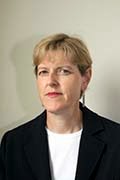
Prof Rosemary Hunter
Prof Rosemary Hunter (KLS, Kent) took to the podium next with an inspiring tale of how she and her editorial team had used an online OA journal to overcome some of the problems inherent in traditional academic publishing. These included a lack of control over style, format and production, little or no remuneration, and the resulting journal being inaccessible to most of the world.

They decided, in 2006, to grasp the nettle and founded feminists@law to publish research on feminist legal studies. The cost of doing so was low: they were already providing their labour 'free' to the publisher, and the Open Journals System (OJS) was relatively low cost. Information Services provided some seedcorn funding for the initial venture, and the online journal has not looked back since. Feminists@law retains a robust peer review system, but is now accessed from a huge range of countries across the globe, allowing a wide diversity of voices to join the debate, to inform, to challenge and to discuss.

What surprised Hunter, when the Finch Report was published, was the apparent lack of attention given to this type of publishing, despite the potential benefits it offered. The debate was all about green versus gold, and there was little room for alternatives.

This issue came up time and again throughout the afternoon, with a number of speakers expressing their exasperation with  this polarity. Not only should the OA debate not be seen as just Green/Gold, but the assumption should not be made that Gold means expense: over two thirds of Gold OA journals are free.

Hunter finished by highlighting how light and flexible this new form of publishing was. It was light in terms of expense (a single Article Processing Charge (APC) could pay for the cost of a whole journal, using online OA), and flexible in terms of the type of media that could be accepted (it no longer had to be solely text-based); but it was not lightweight in terms of academic rigour or seriousness.

Hunter was followed by Dr Mari Williams, Deputy Director of the BBSRC and a member of the RCUK Research Outputs Network. She was inspired by Hunter's talk, and I got the sense that she had been at times frustrated by the pace of change elsewhere in the sector. RCUK had been having 'robust discussions' with publishers. Perhaps inevitably some were seen to be dragging their feet over OA, or rather were making the most of being able to generate income from both charging subscriptions and APCs, whilst also relying on 'free' academic labour.

Nevertheless, change was in the air, and RCUK had made considerable progress on the back of Finch since the policy had come into force in April. The landscape was moving quickly, she admitted, but 'not always in the direction we would have hoped for.' RCUK were hoping for 100% OA compliance by 2018, with 75% of that being Gold.

You could almost hear the sharp intake of breath across the audience. Here's hoping.

Dr Caroline Edwards
After a brief break Dr Caroline Edwards took to the stage. Edwards is a lecturer at Birkbeck, and co-founder of the Open Library of Humanities (OLH). This project aimed to build a 'mega journal' for the humanities, in the style of the Public Library of Science (PLoS), as well as piloting a scheme for OA monographs. She put up a slide that showed the huge rise in the cost of serial publishing compared to inflation: it looked out of kilter and unsustainable.

Those involved in OLH had taken heart from the 'hacker' culture in the sciences since the 1960s, the idea of 'gifting' knowledge for the advancement of the sector, and peers sharing and commenting on each others work.  Edwards had also set up Alluvium, a journal that allowed for the sharing of articles prior to publication, along the lines of arXiv, developed by physicists Paul Ginsparg as a way of getting feedback quickly from peers on 'pre-print' articles.

Kevin Ashley
At first Edwards' successor at the podium, Kevin Ashley, appeared to have the toughest call of the day: explaining and making the case for research data management. But he was an engaging speaker, and made a very convincing case: open sharing of data prevents both deliberate and accidental mistakes by allowing experiments to be reproduced, or sources to be investigated.

 However, this is not without its challenges: many researchers and academics are reluctant to release what they had spent years collecting. Moreover, even if they are willing (or forced) to share, how can all this data be archived and curated? The Digital Curation Centre, of which Ashley is the Director, is helping with this, but the task is not to be underestimated.

After the aspirational and inspirational, Dr Michael Jubb, Excecutive Director of the Research Information Network, gave some perspective on actual progress towards OA. After 20 years of OA, why have we not got further? Whilst a passionate believer in the cause, he recognised many of the issues which needed to be addressed. Many - on both sides - had very entrenched views, and there needed to be more compromise along the road. Perhaps more importantly, the UK is a minor but important player in the research world: 94% of articles have no UK investigator. The UK cannot implement OA alone.

The second Finch Report was due to be published imminently, and would assess developments since July 2012. Certain of these had the potential to completely change the landscape. For instance, some publishers were giving public libraries 'walk in' access to all of their titles. This could have the effect of giving public libraries access to a better range of cutting edge research than those of universities. What was really needed was coordination: funders, researchers, universities, publishers and learned societies needed to work together if the vision was to have any chance of being realised.

The University's VC, Prof Dame Julia Goodfellow, drew the event to a close by pulling together the strands that had been explored throughout the day. Issues of Gold or Green (or Hunter's 'inbetween'), of coordination, of 'double dipping' by publishers: much needed to be resolved, but OA had the potential to change how research was accessed and knowledge advanced. After 450 years, it's about time.

Friday, 30 August 2013

Open Access: Understanding the New Environment - Free Event, 23 October

As part of international Open Access Week, the University is inviting some key players in the sector to discuss the current state of play. In the sixteen months since Dame Janet Finch published her report on Open Access (OA), policy has moved on quickly: the Government accepted the findings of the Report, and the Research Councils (RCUK) have mandated OA publishing. This event will be a good opportunity to take stock. The programme includes speakers from HEFCE, RCUK, the Open Library for Humanities and the Research Information Network, as well as editors of OA journals.

Thursday, 15 August 2013

RCUK Scrabble

It's holiday season, even for the good folks at Death Star Avenue. Now read on.

A holiday cottage on the west coast of Wales. Rain is lashing against the windows, and the casements are rattling. It's August. A group of RCUK apparatchiks are huddled around a game of Scrabble. It's clear they're playing an unusual variant of this family favourite in which only acronyms can be used.

Friday, 21 June 2013

An Introduction to Open Access

This week sees the introduction of the University's Open Access Policy. For those who are new to OA, I thought it would be useful to post a brief introduction to it.

Broad definition

Open Access (OA) is the practice of allowing academic outputs to be available to all, free of charge. Generally this applies to journal articles, but some effort is being made to apply OA to monographs and other outputs.

OA takes two forms:
  • 'Green': in which an article is archived in a freely accessible online repository (such as KAR);
  • 'Gold:' in which an article is made freely available through a journal without subscription. Some publishers levy an 'article processing charge' (APC) for allowing an article to be made available OA.
History

Although OA can be traced back to the 1940s, the modern movement began in the 1990s, and emerged first in the sciences. The earliest free online archive was arXiv, established in 1991. PubMed, an online repository for medical research, was created in 1997, and the ePrints software was developed in 2000. 

The movement gained momentum in the early 21st Century. 34,000 scholars signed a 2001 open letter to publishers calling for open access, and pledging not to publish in non-OA journals. The Budapest Open Access Initiative pinned down the definition of OA in 2002, and this was followed in 2003 by the Berlin Declaration. An increasing number of OA journals and repositories were established subsequently.

The Wellcome Trust mandated OA in 2006; the European Commission (EC) launched an OA pilot project in 2008, and has made it mandatory for Horizon 2020.

In 2011 the UK Government set up the Finch Group to look at open access. It reported in 2012, and all of its recommendations were accepted by the Government.

UK Research Councils

As a result, the UK Research Councils (RCUK) OA Policy states that, from 1 April 2013:
  • RCUK-funded research published in peer review journals should be made OA;
  • Both Gold and Green OA is supported, but Gold is preferred;
  • If Green is chosen, investigators have 6 months (for STEM subjects) and 12 months (for Humanities and Social Science subjects) to deposit their articles in a repository. There is some flexibility with this during the 'transition period' (until 2018);
  • Articles should be made available under a CC BY licence;
  • Underlying data should also, where possible, be made freely available.
Investigators can check whether their chosen journal complies with these demands on the SHERPA/RoMEO website.

RCUK expects institutions to make a minimum of 45% of the papers arising from RCUK projects OA in 2013/14, rising to 53% in 2014/15. 

Debate

OA is not without its controversy. Concerns include: 
  • It may be expensive, and publishers may 'double dip' - i.e. charge readers by subscription, and contributors through the APC;
  • Funders are spending money on OA rather than the research itself. However, the Wellcome Trust estimates that the cost of OA is no more than 1-2% of its budget;
  • The funders' OA mandate may limit individual academic freedom to publish wherever they choose;
  • It may exclude those who can't afford APCs from the more high profile 'Gold' OA;
  • It may threaten the future of learned societies, which rely for their existence on income raised from their journals;
  • Authors may lose control of their work through the CC BY licence.
However, these concerns are countered by those who perceive the advantages:
  • It removes the 'power to publish' from a small number of large publishers;
  • It allows for the wider dissemination of knowledge beyond academia;
  • This, in turn, allows research to be used commercially more quickly;
  • It may raise the profile of a wider range of authors, and increase citation rates for articles.
More information

Peter Suber provides a useful and comprehensive view of open access. The Guardian has an open access section of its Higher Education Network that provides update on its development. Elsewhere there are a wide range of voices and opinions on OA produced by governments, funders, learned societies, universities and individuals. Search any of their websites for specific policies or standpoints, or contact me directly for more information.

Tuesday, 9 April 2013

Bear Sh*ts in Woods Shock!

Pope: Catholic, apparently.
Well, you may have noticed that things have been somewhat quiet over at Fundermentals Towers. Yes, I've been away, furiously eating Easter eggs and huddling by an electric fire to keep warm.

I returned this week and found a great story to kick start a new season of blogging. On 5 April Research Fortnight reported that BIS had published a report that concluded that 'the richest universities take the lion's share under dual support'.

This must rank, for news worthiness, along side the recent discovery of the Pope's Catholicism. Yes, the biggest, most research intensive universities really do get most of the government's research funding. What are they going to discover next? That knowing more about stuff makes you cleverer? That drinking coffee makes you jittery? That dogs bark and cats miaow? That the 1994 Group lacks direction?

I guess what does make it interesting is the scale of concentration, and what that bodes for the future. The top 10% of universities (in terms of income) get 64% of the Research Councils' funding. The second 10% get 20%, the next 10%, the next 4%, until you get to the final 40% of universities which get nothing. Interestingly, this distribution has altered little over the last decade, which calls into question the belief that RCUK are moving to concentrate their funding on the big hitters.

So I shouldn't be so scathing. There's gold in there, but you just have to dig for it.

Monday, 25 March 2013

SSC Close the Circle

Shelby SuperCars Inc. Share an acronym
with the Shared Services Centre.
Oh! The glamour!

There's good news from the Shared Services Centre this week. And it's not often I get to write that sentence.

One of the long standing gripes for us research managers and administrators is that, whilst we're integral to the submission process for all Research Council applications, we don't directly get to hear the outcome of them unless they're successful. Whilst it's always nice to get good news, we would welcome bad news as well.

Why? Well, for one thing, it would let us tidy up our records. You know how anal us bureaucrats are. But, more importantly, it would help us to help the academics. When they get the dismissive one liner from the SSC, the chances are that they'll be a sobbing wreck on their office floor. If we had the nod from the SSC we could get in touch with them to talk about other alternatives. Or at least rail at the unfairness of it all with the applicant. We could share their pain.

So it was great to get the SSC email update this week and read the following: 'the Research Councils have agreed to provide feedback to Research Organisation administration offices on the outcome of proposals.'

Fabulous! But not only that, it sounds like the info they intend to provide will be more thoughtful than just a yes/no outcome. 'This will provide information on the relative ranking or scoring of proposals, as well as written feedback on the decision.'

Great news, then. They don't say when this system will be rolled out, but hats off to SSC for recognising a problem and moving to provide a solution.

Saturday, 9 June 2012

RCUK Publishes Impact Case Studies

Last week RCUK published impact case studies. The intention of this was, I think, twofold: to highlight to external bodies (such as the Treasury) that public money is being well spent, and to highlight to potential applicants examples of best practice. Having read them all now I feel that they might have succeed at the latter, but not necessarily the former. Which is a shame, as I do think that it's crucial to make the case for the importance of research to government and the wider world.

The case studies are split into four categories: ‘policy’,‘business’, ‘public engagement’ and ‘voluntary and charitable’. Some appear in more than one category. RCUK had a huge pool of projects to choose from for their fourteen examples. The Research Councils give out grants for some 2,500 projects each year.As such, you would expect them to be spectacular examples of their kind, but I wasn't convinced.

Unsurprisingly, the business-related ones have the clearest impact and it is easy to make the case with these: licensing agreements, patents, and new technology with applications that will benefit society. All good. Things become a bit less clear in the other three categories which, to my mind, are somewhat weaker. Or rather, I think it’s very difficult to make the case. Many talk about ‘stakeholder engagement’, which of course is good, and of feeding into the development of policies and working practices. Which is also good. Others talk about their tweets and blogs, their public lectures and even their jazz compositions. Okay, so I know it's very hard to try and quantify the effect that these activities have had, but I would have thought that RCUK might have been able to provide more hard evidence as to the effect their funded research is having on society.

Nevertheless, I think the positive that potential applicants should take from this is that expectations are low and broad. If you can demonstrate that you are able and willing to engage with end users, to talk to school children and put on public events, then you will easily have met the expectations of your future paymasters. And, you never know, with your conceptual art spin-offs and children’s books sub-projects, you could well be up there on the RCUK website in years to come.

Thursday, 24 November 2011

More Entrails Needed

A quick post to publicise the excellent Research Counselling, a cartoon website the focuses on the trials and tribulations of dealing with the Research Councils. I particularly liked this recent one, about forecasting your project's 'national importance' for the EPSRC.

Oh the cynicism!

Monday, 5 September 2011

I Predict(ed) a Riot (Research Funding Call)

Cast your mind back 26 days. Yes, I know, it seems like decades ago now. Before the holidays. Before the return to work. Even before the return to school. Well, 26 days ago I was trying to predict when the Research Councils would issue a call for proposals on the London Riots.

The piece led to a short Twitter exchange in which I discussed the possible timeframe for a call. I was thinking it would be about six months, but Catherine Baker noted that there was already a call for papers on Breivik, around 20 days after the events in Norway. In the end I have to give it to Kate Bradley who accurately suggested four weeks. I thought that was hasty, but lo and behold, the LSE today announced that it had been funded to look at 'the causes and consequences of the English riots last month.'

Fabulous! The only thing stopping me handing over a big, glittering prize to Kate for her shrewd insight that, frankly, borders on clairvoyance, is that it was the Joseph Rowntree Foundation funding the research and not the Research Councils. 'There have been no attempts to systematically speak to those involved in the riots', gushes the LSE press release. Well, it was just a month ago. Give them time.

Moreover, I don't remember seeing the call for this. Given the usually glacial timeframe for funders to issue a call and assess applications, the haste of this announcement borders on the unseamly. How was Professor Tim Newburn identified so quickly as the worthy recipient of Rowntree's largesse? Hmm, I'd love to know, so that I can be well positioned for the next big news story.

Friday, 6 May 2011

Inefficient Efficiency

The Research Councils have recently sent all universities details of their plans for 'more efficient' (i.e. less) funding for projects. Entitled ‘Efficiency 2011-15: Ensuring Excellence with Impact’, the proposals include heartwarming coalition-style cuts, including snipping the allowance for inflation to zero, and the indirect rate by 3.5%. To be applied retrospectively, natch.

Most alarming are their half-baked proposals for equipment charges. Under the new system (rushed out and already in place, from 1 May) RCUK will decide what percentage of the equipment costs they’re prepared to meet on a ‘case-by-case’ basis. Not only that, but for expensive bits of kit (over £121.5k) you'll have to put together a 'business case' (that's another 2 page attachment to the application, thank you very much) and check out what other equipment is already available in your area.

Now this begs a number of questions, and brings to mind some hilarious scenarios:
  • If we don't know what percentage of the equipment cost RCUK will fund, how do we know whether we can afford to 'match fund' them? When the University approves the application for submission, does it have to provide a blank cheque for the remainder?
  • What if RCUK decides to fund the project but not the equipment?
  • What is the 'area' that needs to be checked for existing equipment? Is it geographically restricted? For Kent, 50 miles from London, is it every London university? Or the whole south east? As far as Brighton? Or - as the crow flies - Essex? Is it any university covered by a Network Rail card?
  • How do we check? Do we get on the blower to all 121 universities on the off chance that they might have an electron microscope they're not using?
  • What if the other university that has the kit doesn't necessarily want to share it?
  • What if - weirdly - they're already using it?
  • What if something happens when a piece of equipment is being used by an outside organisation? Who's liable?
I can see lots of potential for a slew of websites to service this new industry: ‘lastminute.com' could offer special last minute deals on equipment which is going spare, and 'confused.com' could compare the offers of equipment from competing universities. Better still, how about 'speed dating' events for the potential user and provider of equipment?

The possibilities are endless. I’m looking forward to clarification from RCUK on these with relish.

Wednesday, 2 February 2011

Medical Research & Non-Standard Funding: Notes from a Seminar

I went along to an excellent PVC's Lunchtime Seminar this afternoon on medical research and non-standard sources of research funding. There were 30-40 others there with me, from the University and beyond (including the NHS), and we heard from four people with different experiences in this area.

Prof Darren Griffin kicked things off by outlining his experience of working with charities, and how this differed from the more conventional Research Council route. In Darren's view, Research Councils had got to the stage whereby the appilcation process was akin to a bureaucratic lottery, and the monitoring of awards could be burdensome. Charities, by contrast, were more interested in flexible partnership. However, one should carefully target which charities to approach:
  • is your research relevant to the stated (and unstated) aims of the charity?
  • are you likely to have results that will fulfil the goals of that charity?
  • do you have personal connections with the charity?
  • what can you do to help promote the charity, by acting as an advocate or directly fundraising for them?
Charity funding varied hugely, and he demonstrated this range by highlighting a number of recent awards at Kent, from £1.7m to £150. It is useful, therefore, to have in mind a 'tariff' so that a charity can get a sense of what can be funded. For instance:
  • £1m would fund a 5 year programme;
  • £300k would fund a 3 year postdoc;
  • £10k would fund 1 year of consumables;
  • £1k would fund reagents;
  • right down to £100 for a micropipette or £50 for a printer.
Prof Bill Gullick and Mary Buchanan then spoke about the work of the Kent Cancer Trust. KCT was established six years ago to bring together clinicians and scientists in the county to develop new treatments based on observed patient need. Mary is Chair of Trustees of the KCT. KCT had provided small amounts of funding that had been effective in enabling research, often at PhD level. One example was £8k for a studentship that enabled a MPhil student to carry on to do a PhD. The student had then raised £5k herself for consumables, and had the potential to have a considerable effect in the fight against cancer.

The final speaker was Alison Coles of the Development Office. She spoke about philanthropic donations, and how she can help in facilitating interactions between faculty and donors. She also highlighted both internal and external matched funding schemes. Interestingly, she noted that whilst a number of academics had come forward to enquire about funding, none had done so for health research. Bill suggested that this is something that those in the audience should remedy.

The session ended with a discussion of some of the issues raised in the talks. If you would like slides from the seminar, do get in touch. Alternatively, if you'd like to find out about the next events in PVC's Lunchtime Seminar series, have a look at the dedicated page here.

Wednesday, 8 September 2010

RCUK Moon Rocks Kidnapped

A delicious story reported by Research Fortnight: apparently the rocky road to development of the Research Councils' 'Shared Service Centre' (SSC) has just got rockier. Bills have - allegedly - gone unpaid, to such a degree that the courier TNT refused to deliver to Polaris House, including a consignment of 'irreplaceable' moon rocks, destined for the STFC. Oh, you couldn't make it up.

Elsewhere various NERC facilities have been blighted by unpaid electricity and telephone bills, with bailiffs beating down their doors (sort of. Come one, with a story like this there's room for a little extra colour) and impounding computer equipment.

Whilst officially putting a brave face on it, dismissing these moon rock shenanigans as 'a few minor hiccups', off the record some on Death Star Avenue are saying that 'the SSC will never pay for itself - not in a million years.'

Don't you love it? I await the next installment with glee.

Thursday, 1 April 2010

Ch-Ch-Changes to JeS

The Research Councils' Joint Electronic Submission system (JeS) is introducing some changes on 20 April. These are intended to make the site more accessible - well, as John Lennon sang in response to Paul McCartney's chirpy 'it's getting better', 'couldn't get much worse...'
The changes include a redesigned layout, a check list of what has and has not been completed, guidance information, a clearer link to the attached documents, and the 'submit' button only appearing once all the mandatory sections have been completed. I've a pdf outlining all these changes in more detail; contact me if you would like me to pass this on.