 |
| @NIHR, apparently. Or possibly a forgotten Britpop band |
Showing posts with label twitter. Show all posts
Showing posts with label twitter. Show all posts
Monday, 15 January 2018
Dude, Who's Got My Twitter?


Monday, 5 December 2016
Using Social Media to Support your Research
I’ve written before about social media, and about some of the sessions we’ve run on research and social media (such as those led by Nadine Muller and Becky Higgitt), but there seems to be an insatiable appetite amongst academics to understand them better, to participate fully and - in time - benefit from them.
The Early Career Researcher Network session in Medway on Wednesday went some way towards satisfying this demand. It was led by three academics from very diverse disciplines, who together gave an overview of the way in which social media can be used to talk about your research and engage with others beyond your School, to recruit research participants and manage a project, and to disseminate research, track impact, and improve citations.
Thursday, 19 November 2015
Tips on Using Twitter in Academia
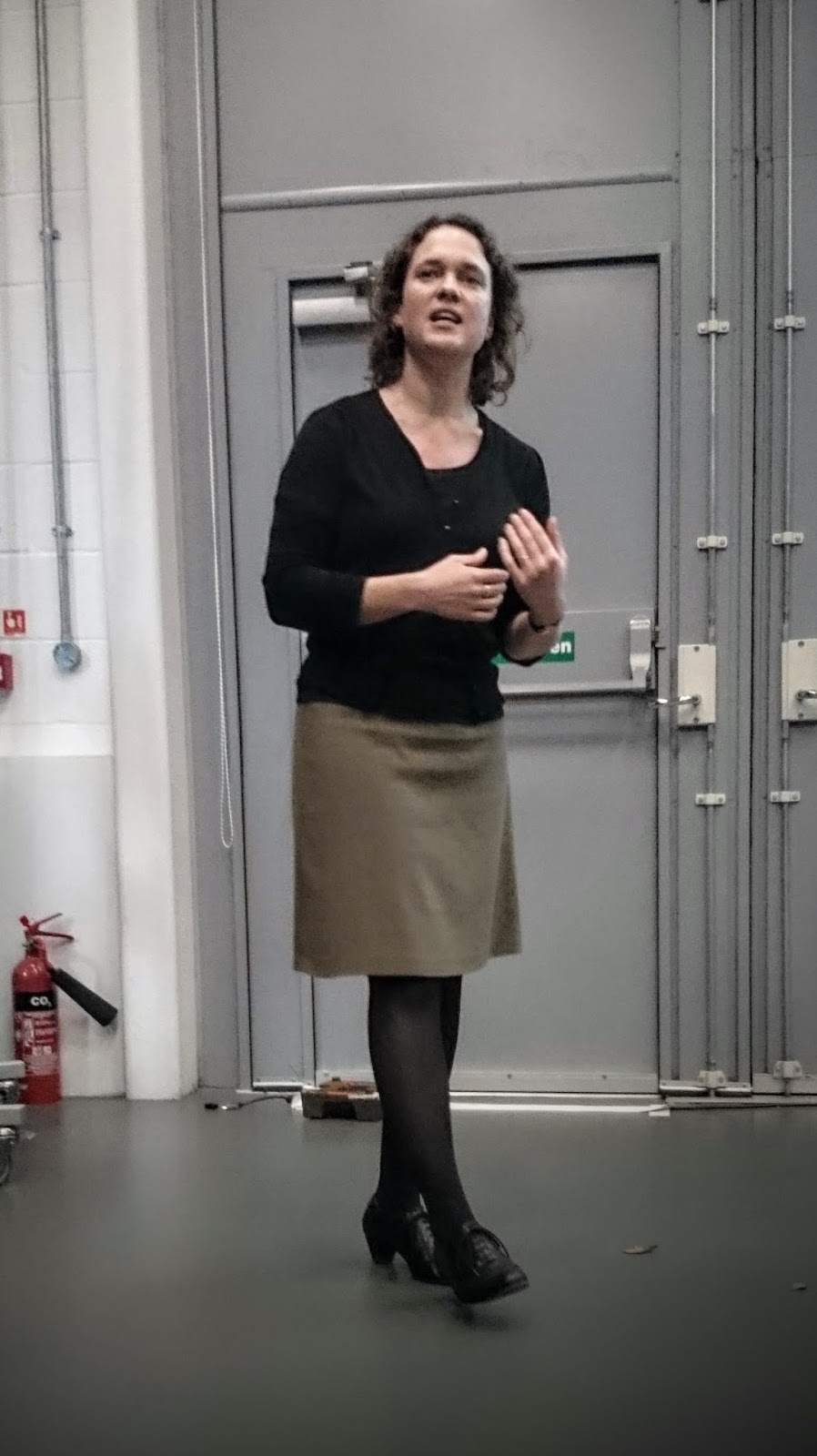 |
| Dr Rebekah Higgitt |
Friday, 21 February 2014
Academia and Social Media
 |
| Dr Nadine Muller |
Technology
is changing the way we access information, and how we communicate. Nowhere is
this more apparent than in academia. Social media sites, such as Facebook, LinkedIn and Twitter, and blogging platforms such as Blogger and Wordpress, are increasingly being used to
raise profiles, to disseminate research, and to make links with potential
collaborators.
Is
it possible to embrace the new technology without compromising your integrity
or short-selling your research? Yesterday Dr Nadine Muller,
a Lecturer in English Literature and Cultural History at Liverpool John Moores University, spoke to the Early
Career Researcher Network about both the difficulties, but also the
potential benefits, of using social media.
Many
in academia are hostile to social media. It’s an additional demand on your
time, and there is expectation that you need to be available and responsive all
the time. It’s like time’s
winged chariot, always at your back, harrying and harassing you. But Muller
pointed out the benefits:
- Resources: there is a culture of sharing on the internet. Although it goes against the commercial imperative of publishers, you can seek out articles direct from authors, and get access to resources that wouldn’t be available conventionally;
- Knowledge: it gives you access to additional knowledge beyond academia. For instance, Muller has an interest in the cultural understanding of widowhood; by engaging with widows groups on Twitter, she was able to disseminate her work more widely (see below), but also to gain access to a more immediate well of experience;
- Writing: many academics find it difficult to start writing, to face the blank page. Writing a blog post about your research and your ideas is a good way of corralling your thoughts and drafting your article. It doesn’t have to be perfect; as Muller said, ‘you don’t have to be brilliant every day’;
- Thinking: similarly, drafting your research via blog posts helps you to refine your research questions, and receive useful feedback;
- New Audiences: Social media reaches beyond academia, to the engaged and interested generalists, to policy makers, to teachers, and to anyone else who might benefit from your research;
- Networking: research, especially in the humanities and areas of the social sciences, can be quite isolating. Social media allows you to connect, to discuss and to interact whilst still remaining at your desk;
- Opportunities: Social media raises your profile, and creates and opens up opportunities that you may not otherwise have.
Beyond
research, social media is increasingly important as a teaching tool. For
instance, Muller encourages (and sometimes requires) her students to engage
with each other through Twitter, through creating a blog, and through critical debate on
discussion boards.
The
difficulty with this is twofold: firstly, we make the assumption that
students are naturally adept at using social media, and yet we provide very
little training for them. The same is true for staff, who are encouraged to
tweet and blog without any initial hands on support or training. Secondly, if
students are more formally being assessed on their social media work, what
criteria should be used?
Throughout
the session the audience had been questioning Muller, and a number of issues
were raised, such as the how to avoid plagiarism and balancing private and
public personae. Through discussion it became clear that these weren’t the bête
noires that they had been built up to be: if anything blogs helped avoid
plagiarism by putting your thoughts into the public domain at an early stage,
and the private/public divide could be handled by using different platforms, or
different accounts, for different parts of your life.
Muller
finished by highlighting two key problems with social media:
- Firstly, it lends itself to procrastination. Whilst blog posts could be used to kick start your writing, the potential for diversion and delay is endless;
- Secondly, exploitation. Social media is often seen as an ‘add on’ to your duties, and there is often an expectation within your department or centre that you would be willing to build a web presence for free. The sooner that social media skills are professionalised, the better.
Muller
used Prezi for her presentation, consisting of
a series of images that sparked different issues. For that reason the slides
won’t be available afterwards. However, I would encourage you to read her excellent website, and follow her on Twitter, to find out
more about social media and the new academic.
Monday, 20 January 2014
ECR Network: Social Media and Academia
19 Feb, 2:30pm-4:30pm
Darwin LT3
 |
| Dr Nadine Muller |
Technology is changing the way we access information, and
how we communicate. Nowhere is this more apparent than in academia. Social
media sites, such as Facebook, LinkedIn and Twitter, and blogging platforms
such as Blogger and Wordpress, are increasingly being used to raise profiles,
to disseminate research, and to make links with potential collaborators.
Is it possible to embrace the new technology without compromising
your integrity or short-selling your research? Dr Nadine Muller is a Lecturer in
English Literature and Cultural History at Liverpool
John Moores University, and has demonstrated how to use social media and
blogs effectively. She has written on life as a New Academic,
as well as highlighting her own research,
and is followed widely on Twitter.
The event is free and open to all staff, and there'll be tea/coffee. Whilst this session is intended primarily for early career researchers (ECRs), more senior staff who are new to social media are also welcome. Do let me know if you plan to come along.
The event is free and open to all staff, and there'll be tea/coffee. Whilst this session is intended primarily for early career researchers (ECRs), more senior staff who are new to social media are also welcome. Do let me know if you plan to come along.
There will also be an opportunity to chat to Nadine informally at
the ECR Social at the Dolphin
in the evening, from 7pm.
Tuesday, 25 June 2013
Meanwhile, in a Parallel Universe...
For a brief moment yesterday Richard Dawkins was trending on Twitter. Dawkins has, of course, a rich and impressive research career behind him, and was formally the Simonyi Professor for the Public Understanding of Science at Oxford. The reason he was trending, however, was not so much research (beyond his coining of the concept of the 'meme'), or even public understanding of research, but for this fabulously beyond-parody video.
It certainly did the trick - sort of - in demonstrating the idea of a 'meme', as the Twitter trend showed. But did it lead to a better understanding of science by the public? I imagine not: most who viewed it would be mystified rather than enlightened. Those who weren't too busy wiping away the tears of laughter, of course.
This, in turn, raises the larger question of the remit of those working on advancing the public understanding of science. Should they be saying 'yes' to any opportunity to engage with the public? Is being out there, being seen by the public, enough in itself, or should they choose their engagement carefully?
You won't be surprised that I think the latter. I believe there's a danger, with these kind of events, of public intolerance with both boffins and conceptual artists becoming conflated. And that, ultimately, will be to the detriment of both.
It certainly did the trick - sort of - in demonstrating the idea of a 'meme', as the Twitter trend showed. But did it lead to a better understanding of science by the public? I imagine not: most who viewed it would be mystified rather than enlightened. Those who weren't too busy wiping away the tears of laughter, of course.
This, in turn, raises the larger question of the remit of those working on advancing the public understanding of science. Should they be saying 'yes' to any opportunity to engage with the public? Is being out there, being seen by the public, enough in itself, or should they choose their engagement carefully?
You won't be surprised that I think the latter. I believe there's a danger, with these kind of events, of public intolerance with both boffins and conceptual artists becoming conflated. And that, ultimately, will be to the detriment of both.
Friday, 22 June 2012
Science: It (Must Be a Borat) Thing
It's been a joy to follow today's Twitterstorm over the EC's 'Science: It's a Girl Thing' video. The video itself is pitched so perfectly that you can't help thinking that the EC drafted in Chris Morris or Sacha Baron Cohen to write and direct it. From the fixation on make up, to the music video styling, it's jaw droppingly awful. You watch it thinking, 'is this for real?'
Whilst I don't think it will attract any more women into the lab, I don't think it will put anyone off either. Women - and men - are more media savvy these days; they won't be swayed by this nonsense, and will recognise that it has nothing to do with real science.
Let's look on the bright side: it has, for better or worse, highlighted the issue of the gender imbalance in the lab. For a bit of Friday light relief, take a couple of minutes to watch it yourself:
Whilst I don't think it will attract any more women into the lab, I don't think it will put anyone off either. Women - and men - are more media savvy these days; they won't be swayed by this nonsense, and will recognise that it has nothing to do with real science.
Let's look on the bright side: it has, for better or worse, highlighted the issue of the gender imbalance in the lab. For a bit of Friday light relief, take a couple of minutes to watch it yourself:
Monday, 28 November 2011
Back to the Future with Conference Alerts
 Last week an academic called to ask me whether I knew of an email alert system for upcoming conferences. There's plenty of alerts out there for funding opportunities, but none that I knew of for conferences. Luckily, Twitter came to the rescue. I put out a call, and Damien Hall quickly came back, pointing me in the direction of the cunningly titled 'Conference Alerts'.
 Sure, it all looks a bit 1995, but it does seem to provide info on a vast array of disciplines, including interdisciplinary areas. So, if you're wondering what's coming up in your area, pay it a visit. Alternatively, if you know of other databases or email alerts with a more 21st century interface, drop me a line.
Monday, 9 August 2010
Research Services Twitter
 You can now keep update with the world of research funding via the University of Kent's Research Services Twitter updates. We'll alert you to any new posts on this blog, but also info on recent funding alerts, and news gleaned from sources across the twittersphere.
You can follow us here.

Subscribe to:
Posts (Atom)