Pages

Showing posts with label Julia Goodfellow. Show all posts

Monday, 28 October 2013

Notes from 'OA: Understanding the New Environment' Event at Kent

Last week saw an international focus on Open Access (OA), and the University played a part by hosting an event to explore the brave new post-Finch world.

Dr Steven Hill
Dr Steven Hill, Head of Research Policy at HEFCE,  started the ball rolling. He traced current academic publishing practices back to 1665, when the first Secretary of the Royal Society, Henry Oldenburg, set up Philosophical Transactions. It was the world's first scientific journal, and set the template  for almost half a millennium of academic publishing.

450 years is pretty good going, but the old machinery is beginning to creak. 1.5m articles are published every year, roughly one every 20 minutes. We no longer have the ability to read - or even know about - all of these. OA offers us the tools to access and 'mine' this mountain. If we ignore it then we risk being suffocated in an academic landslide.

Hill went on to describe HEFCE's current consultation on incorporating OA in a post-2014 REF. The ultimate goal, said Hill, was to get 'maximum access to research outputs whilst sustaining the scholarly communication system.' To do so HEFCE believed that outputs submitted to the REF should be OA, but the devil was in the detail: what should be the criteria? What the definitions? What should be excluded? Hill outlined HEFCE's current thinking, and the issues it was grappling with.
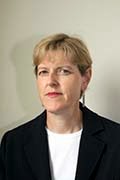
Prof Rosemary Hunter
Prof Rosemary Hunter (KLS, Kent) took to the podium next with an inspiring tale of how she and her editorial team had used an online OA journal to overcome some of the problems inherent in traditional academic publishing. These included a lack of control over style, format and production, little or no remuneration, and the resulting journal being inaccessible to most of the world.

They decided, in 2006, to grasp the nettle and founded feminists@law to publish research on feminist legal studies. The cost of doing so was low: they were already providing their labour 'free' to the publisher, and the Open Journals System (OJS) was relatively low cost. Information Services provided some seedcorn funding for the initial venture, and the online journal has not looked back since. Feminists@law retains a robust peer review system, but is now accessed from a huge range of countries across the globe, allowing a wide diversity of voices to join the debate, to inform, to challenge and to discuss.

What surprised Hunter, when the Finch Report was published, was the apparent lack of attention given to this type of publishing, despite the potential benefits it offered. The debate was all about green versus gold, and there was little room for alternatives.

This issue came up time and again throughout the afternoon, with a number of speakers expressing their exasperation with  this polarity. Not only should the OA debate not be seen as just Green/Gold, but the assumption should not be made that Gold means expense: over two thirds of Gold OA journals are free.

Hunter finished by highlighting how light and flexible this new form of publishing was. It was light in terms of expense (a single Article Processing Charge (APC) could pay for the cost of a whole journal, using online OA), and flexible in terms of the type of media that could be accepted (it no longer had to be solely text-based); but it was not lightweight in terms of academic rigour or seriousness.

Hunter was followed by Dr Mari Williams, Deputy Director of the BBSRC and a member of the RCUK Research Outputs Network. She was inspired by Hunter's talk, and I got the sense that she had been at times frustrated by the pace of change elsewhere in the sector. RCUK had been having 'robust discussions' with publishers. Perhaps inevitably some were seen to be dragging their feet over OA, or rather were making the most of being able to generate income from both charging subscriptions and APCs, whilst also relying on 'free' academic labour.

Nevertheless, change was in the air, and RCUK had made considerable progress on the back of Finch since the policy had come into force in April. The landscape was moving quickly, she admitted, but 'not always in the direction we would have hoped for.' RCUK were hoping for 100% OA compliance by 2018, with 75% of that being Gold.

You could almost hear the sharp intake of breath across the audience. Here's hoping.

Dr Caroline Edwards
After a brief break Dr Caroline Edwards took to the stage. Edwards is a lecturer at Birkbeck, and co-founder of the Open Library of Humanities (OLH). This project aimed to build a 'mega journal' for the humanities, in the style of the Public Library of Science (PLoS), as well as piloting a scheme for OA monographs. She put up a slide that showed the huge rise in the cost of serial publishing compared to inflation: it looked out of kilter and unsustainable.

Those involved in OLH had taken heart from the 'hacker' culture in the sciences since the 1960s, the idea of 'gifting' knowledge for the advancement of the sector, and peers sharing and commenting on each others work.  Edwards had also set up Alluvium, a journal that allowed for the sharing of articles prior to publication, along the lines of arXiv, developed by physicists Paul Ginsparg as a way of getting feedback quickly from peers on 'pre-print' articles.

Kevin Ashley
At first Edwards' successor at the podium, Kevin Ashley, appeared to have the toughest call of the day: explaining and making the case for research data management. But he was an engaging speaker, and made a very convincing case: open sharing of data prevents both deliberate and accidental mistakes by allowing experiments to be reproduced, or sources to be investigated.

 However, this is not without its challenges: many researchers and academics are reluctant to release what they had spent years collecting. Moreover, even if they are willing (or forced) to share, how can all this data be archived and curated? The Digital Curation Centre, of which Ashley is the Director, is helping with this, but the task is not to be underestimated.

After the aspirational and inspirational, Dr Michael Jubb, Excecutive Director of the Research Information Network, gave some perspective on actual progress towards OA. After 20 years of OA, why have we not got further? Whilst a passionate believer in the cause, he recognised many of the issues which needed to be addressed. Many - on both sides - had very entrenched views, and there needed to be more compromise along the road. Perhaps more importantly, the UK is a minor but important player in the research world: 94% of articles have no UK investigator. The UK cannot implement OA alone.

The second Finch Report was due to be published imminently, and would assess developments since July 2012. Certain of these had the potential to completely change the landscape. For instance, some publishers were giving public libraries 'walk in' access to all of their titles. This could have the effect of giving public libraries access to a better range of cutting edge research than those of universities. What was really needed was coordination: funders, researchers, universities, publishers and learned societies needed to work together if the vision was to have any chance of being realised.

The University's VC, Prof Dame Julia Goodfellow, drew the event to a close by pulling together the strands that had been explored throughout the day. Issues of Gold or Green (or Hunter's 'inbetween'), of coordination, of 'double dipping' by publishers: much needed to be resolved, but OA had the potential to change how research was accessed and knowledge advanced. After 450 years, it's about time.

Monday, 21 January 2013

Notes from Open Access Forum, University of Kent

Introduction

Open Mic: the panel take questions after the talks
Over fifty members of staff gathered in the Senate Chamber on 15 January to discuss issues around the Government’s Open Access (OA) policy. This had been developed following the publication of Dame JanetFinch’s report in June, which recommended that
‘a clear policy direction should be set towards support for publication in open access or hybrid journals...as the main vehicle for the publication of research, especially when it is publicly funded’.
The Vice Chancellor, Prof Dame Julia Goodfellow, opened the Forum by making clear that ‘the direction of travel has been set for us, it is for us to discuss the best way to respond.’ She pointed out that the block funding from RCUK, some £59k for Kent, did not cover the majority of either funded or self-funded research that was currently undertaken, and that some thought needed to be given as to how the OA costs for this would be met.

Ultimately the only possible source for these would be QR. She emphasised that other institutions, both large and small, were having to make similar decisions.

Before handing over to the other speakers, she outlined for clarity the OA terms ‘gold’ and ‘green’:
  • GOLD open access is publication, normally in a standard journal that allows free access to any articles for which an ‘article processing charge’ (APC) has been paid. The RCUK block grant is intended to offset these APCs.
  • GREEN open access is self-archiving of articles that have appeared elsewhere. This may be in institutional repositories such as theKent Academic Repository (KAR), or subject-specific ones such as PubMed. The Research Councils have stated that archiving must happen within 6 months (or 12 months for AHRC and ESRC).

Speakers

Prof Dick Jones (School of Computing, and Faculty Director of Research for the Sciences), stated that ‘in principle’ many in the Sciences were supportive of OA, and that many already did publish via OA journals or self-archive. However, he had a number of concerns, including:
  • The cost of imposing OA universally. If even half the articles currently published by the Faculty were made available via gold OA, the cost would be between £250k-£750k;
  • Having to pay twice, for both APCs and for subscriptions to the journals. This raised a further question of the iniquity of the current publishing model, which relied on academics writing for, editing, reviewing, reading and then paying for the journals.
  • How will APC funding be rationed? Will it be centrally? On what basis will it be provided – first come first served, or the merit of the work, or the impact factor of the journal?
  • The effect on learned societies. These relied on income from subscriptions, and, in turn, supported and developed their community. If their income source was to be removed they faced an uncertain future. Dr Ruth Blakeley (below) concurred with this, suggesting that the loss of learned societies would be more than ‘collateral damage’, as they provide support for both the sector and HEFCE consultations. 

Dr Ruth Blakeley (School of Politics & International Relations) stated that the Academy of Social Sciences was intending to lobby the House of Lords to stop the policy. Their concerns were:
  • One size does not fit all. There was a sense that OA had been developed to suit the publication culture of STEM subjects, and was not suited to the social science and humanities disciplines, which made more use of monographs and ‘slow burn’ articles.
  • It would exacerbate the funding divide. STEM subjects would require more funding for OA, and the policy would therefore exacerbate the already considerable difference in funding between the sciences and social sciences/humanities.
  • Intellectual property. The current policy suggested that publications should be covered by the most permissive ‘creative commons’ licence, CC-BY. This license would let others distribute, remix, tweak, and build upon academic work, even commercially, as long as they credit the author for the original creation. Some perceive a danger in this: for instance, your work may be ‘hijacked’ by causes of which you disapprove. You would have no control over your work. Instead, the sector should push for the more restrictive CC-BY-NC-ND.
  • OA & American journals. Many of the top journals are based in the USA, which hasn’t mandated OA. As such, UK researchers with RCUK funding may be prevented from submitting to them. This may have an adverse effect on their career and profile.
  • OA & the REF. There has been the suggestion that publications submitted for consideration to the next REF may have to be OA. If so, there are implications about funding, timescales and, once again, whether academics are able to submit to the top journals.

Dr James Baker (School of History) had a more positive view of OA. He had worked on KAR, as well as working as an academic in History, and had thus seen the subject from two perspectives. He regarded the move towards OA as ‘a good thing’, as the current model for academic publication was unsustainable: even Harvard library was saying it could no longer afford subscription fees.
  • Misunderstanding. The response from the History discipline suggested that there was some confusion and misunderstanding in the community. An open letter from 21 leading historical journals had suggested that OA sanctioned plagiarism, which was untrue. In addition, there was a level of hypocrisy in the claim that OA would ‘require authors to sign away their rights’, as they already had to do so through traditional publication.
  • Monographs. Interestingly, there was little provision for monographs in the Finch Report, although this was the main avenue for publication in the humanities. Jisc and the AHRC had funded the OAPEN-UK project, to gauge whether allowing online access to monograph texts had had an effect on book sales. The results thus far suggested it hadn’t.

 Trudy Turner (Information Services) discussed some of the issues that IS, in support of the academic community, was facing in implementing OA. KAR would be at the forefront of this, and there had been considerable investment in making it fit for this purpose. KAR had 24,000 publication records, of which half included full text. This was a good proportion, but it was unclear how many publications had not been recorded at all. Nationally all institutions were having to ‘navigate the landscape’, and all were considering what the best model for funding publications should be.

Dr Simon Kerridge (Research Services) outlined some of the pros and cons of OA, before presenting a ‘straw man’ OA policy for discussion. The University did not want to restrict publication or academic freedom; however, there was a need to consider how best to distribute limited funding for OA. If it did not support OA there was the danger of facing RCUK sanctions. Moreover, OA offered potential benefits, such as an increase in citation rates. The straw man policy suggested that the University should encourage/mandate green OA through KAR.

Prof Diane Houston (Graduate School) highlighted the potential impact of undergraduate (UG) and postgraduate (PG) publications. All PGs publish, and many UGs do too; should the University accept responsibility for paying for them to do so through OA? If the University did pay, there should be different criteria for publication from those applied to staff, and there was a need for a level playing field between disciplines.

Discussion

The Vice Chancellor asked for an indication of support for OA generally, and for green OA specifically. The majority of the audience appeared to accept it.

However, a number of questions were raised following the speeches, and issues covered included:
  • How would international collaborations or multiple authored publications be handled?
  • How seriously would universities implement or monitor OA policies?
  • Who is the perceived audience who do not already have access to academic publications?
  • How would funding to facilitate OA be agreed and distributed?
  • Should the sector collectively oppose the Government’s policy on OA?

Conclusion

It was agreed that a representative working group be convened to further develop and consult on the ‘straw man’ OA policy. 

Wednesday, 10 October 2012

ECRs: Planning a Personal Research Strategy


The Vice Chancellor, Prof Dame Julia Goodfellow, launched the University’s Early Career Researcher Network last week by reiterating how important new academics were to the long term health of a research intensive university. In front of a packed room the VC stated that the University was keen to support ECRs as they developed their careers and started to take on leadership responsibilities. Kent already provided a range of formal training courses, but this Network was the opportunity for ECRs to share their experiences, to focus on common issues, and to discuss with and learn from senior colleagues.

Prof Darren Griffin and Jenny Billings then looked at planning a personal research strategy. Their contrasting careers demonstrated that it was difficult to generalise about this, but there were common themes. Darren had had a very ‘traditional’ academic progression, from PhD, to RA, Lecturer, Senior Lecturer, Reader and Professor. Jenny, on the other hand, had had a career outside of academia, and was now working in a self-funded research centre.

ECRs needed to think about how they would be judged by their peers, and to plan for this. As Darren put it, ‘perception is reality’. If you are seen as the leading expert in your field, or a successful grant getter, or someone with great impact, then a virtuous circle is formed, and perceived success leads to further success. He outlined ’10 commandments for getting ahead in research’, which included taking opportunities when they presented themselves (including adapting your research interests slightly to fit with current priorities), building good relationships and allowing team members to shine, and using both failures and successes to build future research.

The group then opened up to discuss their experiences. The issue of time management was common, and Jenny made it clear that ECRs needed to be both flexible and assertive, and be willing to negotiate with others. Developing an academic career was hard work, particularly at the beginning, but being positive and persistent did pay dividends. Both Jenny and Darren encouraged ECRs to remain firm; for instance if a senior colleague said that they didn’t have much time to talk, ask them how much time they did have, and work with that. Knock on doors, and don’t be afraid of rejection.

Slides from the session are available on the Grants Factory SharePoint site, and this will be added to over time. The next ECR Network meeting will take place on 17 October, and will focus on ‘Getting Published in Journals’. It is being led by KLS, but all are welcome. If you want to come along, drop me a line.