Pages

Showing posts with label dfid. Show all posts

Friday, 29 July 2016

Global Challenges Research Fund: A Primer

Introduction

The Global Challenges Research Fund (GCRF) was announced in last year’s spending review (December 2015), and came as something of a surprise to the sector. The previous spending review (2010) had protected the research budget from the worst ravages of austerity, but it was still a flat settlement, and funding was looking a little threadbare five years in.

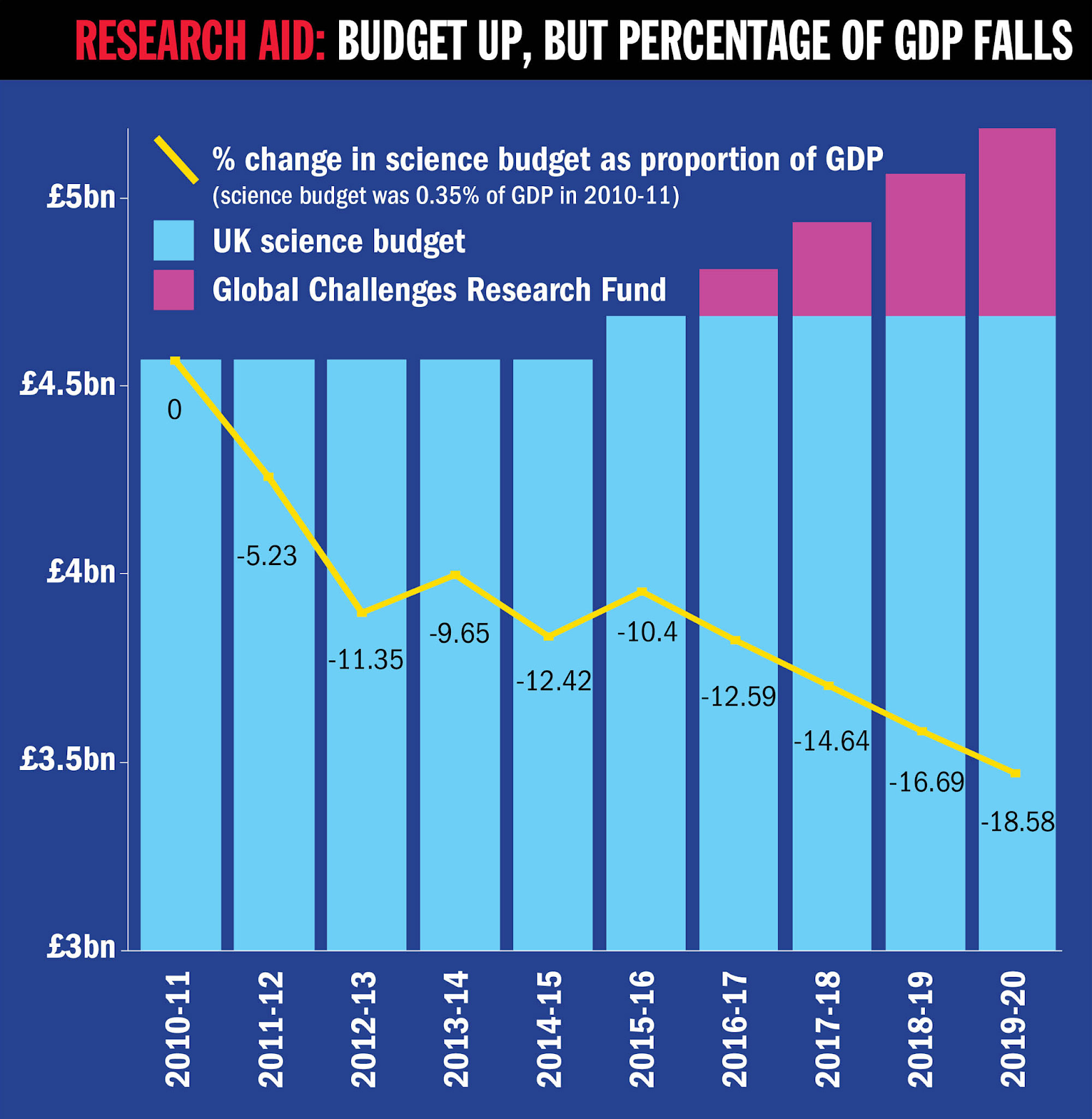
George Osborne, the Chancellor at the time, sought to remedy this somewhat, and announced that the research budget would rise from £4.7bn to £5.2bn by the end of the parliament (2020).
Source: THE
However, there was a catch. The extra £1.5bn would come from a different pot. It would not come from the budget of the Dept for Business, Innovation and Skills, but rather from International Development, and would aim ‘to develop new solutions to the complex multidimensional problems faced by developing countries.’ Note how the Science budget stagnates in the chart on the right, and GCRF rises.

Wednesday, 14 March 2012

Research Funding Increase at DFID

Interesting news reported by Research Fortnight yesterday: DFID research funding is to increase by 60% and DH by 12%, whilst Defra and the Home Office are going to decrease by 21% and 9% respectively.

In cash terms, this means DFID's overall budget will rise from £7.6m to £11m in 2014-15. Research on 'wealth creation' will see the biggest increase, with 'water and sanitation' and 'governance and security' next in line. However, 'global partnerships' is the largest recipient of DFID's largesse.

But this isn't the whole picture, and smaller areas have had a disproportionately large increase, such as those focusing on humanitarian issues.

Whilst this is good news for those working in this area, there's a cruel irony in DFID's budget: they're getting more funding for research, but less for administration. Their administrative budget has been cut by a third. This means that they're going to struggle to actually distribute the research money. In the words of a yellow cartoon character, 'd'oh!' It's hoped that this - ahem - 'difficulty' can be offset by getting RCUK, Wellcome et al to help out. It all smacks slightly of crisis relief efforts, with sacks of cash being thrown off the back of lorries by third party workers to outstretched, imploring hands. Which I guess is apt for the department that deals with International Aid.