Pages

Showing posts with label bbsrc. Show all posts

Friday, 14 June 2019

UKRI Delivery Plan Top Trumps

For us research policy nerds, the past week has been like Christmas. Each of the constituent parts of UK Research and Innovation, as well as the all seeing eye that watches over them, have all produced their Delivery Plans.

These flesh out the - ahem -  'Strategic Prospectus', which was published last year. How long are these valid for? Well, that's moot, but at least until the next Comprehensive Spending Review (so 2019-20) after which it will 'update our 'near-term actions' to reflect the financial years covered in the SR.'

Monday, 15 January 2018

Dude, Who's Got My Twitter?

@NIHR, apparently. Or possibly a forgotten Britpop band
It's a fast moving world in the Twittersphere, and you have to be quick to bag the Twitter handle that is, well, your birthright. Some, such as @BBSRC, were super sharp and got theirs [shame they won't be around much longer - Ed], although that might be more down to the implausibility of any other person/organisation having that acronym. But what about others who were - um - a bit slower or have common arconyms? Dude, who's got my Twitter?

Wednesday, 9 November 2016

Global Challenges and Newton Fund: a Half Day Workshop

At a time when many funders are freezing or limiting their spending, the Government is investing heavily in research collaboration with developing (or ODA recipient) countries. This is primarily through the Global Challenges Fund and the Newton Fund. Following information days on both of these last year, this GROW event is an opportunity to talk about your plans with award holders, reviewers and funders, as well as other applicants. In addition, the workshop coincides with a visit by a small delegation of colleagues from Malaysian universities and Ministry of Higher Education. The full programme is given below.

The workshop is free and open to all at Kent and Eastern ARC partners, and refreshments (including lunch) will be provided, but places are limited and offered on a first come first served basis. Please register here.


Please do not hesitate to get in touch if you have any questions. 


Thursday, 27 August 2015

RCUK Grants to be Delayed 'Until the First of Never'

A successful Research Council applicant awaits his grant.
Following on the heels of the BBSRC's announcement that it would be delaying the start of responsive mode grants until after 1 January 2016, the umbrella organisation for the Research Councils, RCUK, has gone ones step further. In a press release written in crayon it stated that all seven of the Councils would delay the start of grants 'until the first of never'. 

'In order for the Research Councils to manage their budgets effectively,' ran the statement, '[and] allowing for additional investments whilst also maintaining their responsive mode commitments and success rate, we are intending to not actually hand out any money.'

Monday, 28 October 2013

Notes from 'OA: Understanding the New Environment' Event at Kent

Last week saw an international focus on Open Access (OA), and the University played a part by hosting an event to explore the brave new post-Finch world.

Dr Steven Hill
Dr Steven Hill, Head of Research Policy at HEFCE,  started the ball rolling. He traced current academic publishing practices back to 1665, when the first Secretary of the Royal Society, Henry Oldenburg, set up Philosophical Transactions. It was the world's first scientific journal, and set the template  for almost half a millennium of academic publishing.

450 years is pretty good going, but the old machinery is beginning to creak. 1.5m articles are published every year, roughly one every 20 minutes. We no longer have the ability to read - or even know about - all of these. OA offers us the tools to access and 'mine' this mountain. If we ignore it then we risk being suffocated in an academic landslide.

Hill went on to describe HEFCE's current consultation on incorporating OA in a post-2014 REF. The ultimate goal, said Hill, was to get 'maximum access to research outputs whilst sustaining the scholarly communication system.' To do so HEFCE believed that outputs submitted to the REF should be OA, but the devil was in the detail: what should be the criteria? What the definitions? What should be excluded? Hill outlined HEFCE's current thinking, and the issues it was grappling with.
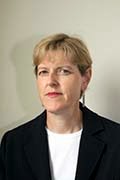
Prof Rosemary Hunter
Prof Rosemary Hunter (KLS, Kent) took to the podium next with an inspiring tale of how she and her editorial team had used an online OA journal to overcome some of the problems inherent in traditional academic publishing. These included a lack of control over style, format and production, little or no remuneration, and the resulting journal being inaccessible to most of the world.

They decided, in 2006, to grasp the nettle and founded feminists@law to publish research on feminist legal studies. The cost of doing so was low: they were already providing their labour 'free' to the publisher, and the Open Journals System (OJS) was relatively low cost. Information Services provided some seedcorn funding for the initial venture, and the online journal has not looked back since. Feminists@law retains a robust peer review system, but is now accessed from a huge range of countries across the globe, allowing a wide diversity of voices to join the debate, to inform, to challenge and to discuss.

What surprised Hunter, when the Finch Report was published, was the apparent lack of attention given to this type of publishing, despite the potential benefits it offered. The debate was all about green versus gold, and there was little room for alternatives.

This issue came up time and again throughout the afternoon, with a number of speakers expressing their exasperation with  this polarity. Not only should the OA debate not be seen as just Green/Gold, but the assumption should not be made that Gold means expense: over two thirds of Gold OA journals are free.

Hunter finished by highlighting how light and flexible this new form of publishing was. It was light in terms of expense (a single Article Processing Charge (APC) could pay for the cost of a whole journal, using online OA), and flexible in terms of the type of media that could be accepted (it no longer had to be solely text-based); but it was not lightweight in terms of academic rigour or seriousness.

Hunter was followed by Dr Mari Williams, Deputy Director of the BBSRC and a member of the RCUK Research Outputs Network. She was inspired by Hunter's talk, and I got the sense that she had been at times frustrated by the pace of change elsewhere in the sector. RCUK had been having 'robust discussions' with publishers. Perhaps inevitably some were seen to be dragging their feet over OA, or rather were making the most of being able to generate income from both charging subscriptions and APCs, whilst also relying on 'free' academic labour.

Nevertheless, change was in the air, and RCUK had made considerable progress on the back of Finch since the policy had come into force in April. The landscape was moving quickly, she admitted, but 'not always in the direction we would have hoped for.' RCUK were hoping for 100% OA compliance by 2018, with 75% of that being Gold.

You could almost hear the sharp intake of breath across the audience. Here's hoping.

Dr Caroline Edwards
After a brief break Dr Caroline Edwards took to the stage. Edwards is a lecturer at Birkbeck, and co-founder of the Open Library of Humanities (OLH). This project aimed to build a 'mega journal' for the humanities, in the style of the Public Library of Science (PLoS), as well as piloting a scheme for OA monographs. She put up a slide that showed the huge rise in the cost of serial publishing compared to inflation: it looked out of kilter and unsustainable.

Those involved in OLH had taken heart from the 'hacker' culture in the sciences since the 1960s, the idea of 'gifting' knowledge for the advancement of the sector, and peers sharing and commenting on each others work.  Edwards had also set up Alluvium, a journal that allowed for the sharing of articles prior to publication, along the lines of arXiv, developed by physicists Paul Ginsparg as a way of getting feedback quickly from peers on 'pre-print' articles.

Kevin Ashley
At first Edwards' successor at the podium, Kevin Ashley, appeared to have the toughest call of the day: explaining and making the case for research data management. But he was an engaging speaker, and made a very convincing case: open sharing of data prevents both deliberate and accidental mistakes by allowing experiments to be reproduced, or sources to be investigated.

 However, this is not without its challenges: many researchers and academics are reluctant to release what they had spent years collecting. Moreover, even if they are willing (or forced) to share, how can all this data be archived and curated? The Digital Curation Centre, of which Ashley is the Director, is helping with this, but the task is not to be underestimated.

After the aspirational and inspirational, Dr Michael Jubb, Excecutive Director of the Research Information Network, gave some perspective on actual progress towards OA. After 20 years of OA, why have we not got further? Whilst a passionate believer in the cause, he recognised many of the issues which needed to be addressed. Many - on both sides - had very entrenched views, and there needed to be more compromise along the road. Perhaps more importantly, the UK is a minor but important player in the research world: 94% of articles have no UK investigator. The UK cannot implement OA alone.

The second Finch Report was due to be published imminently, and would assess developments since July 2012. Certain of these had the potential to completely change the landscape. For instance, some publishers were giving public libraries 'walk in' access to all of their titles. This could have the effect of giving public libraries access to a better range of cutting edge research than those of universities. What was really needed was coordination: funders, researchers, universities, publishers and learned societies needed to work together if the vision was to have any chance of being realised.

The University's VC, Prof Dame Julia Goodfellow, drew the event to a close by pulling together the strands that had been explored throughout the day. Issues of Gold or Green (or Hunter's 'inbetween'), of coordination, of 'double dipping' by publishers: much needed to be resolved, but OA had the potential to change how research was accessed and knowledge advanced. After 450 years, it's about time.

Thursday, 15 August 2013

RCUK Scrabble

It's holiday season, even for the good folks at Death Star Avenue. Now read on.

A holiday cottage on the west coast of Wales. Rain is lashing against the windows, and the casements are rattling. It's August. A group of RCUK apparatchiks are huddled around a game of Scrabble. It's clear they're playing an unusual variant of this family favourite in which only acronyms can be used.

Saturday, 8 June 2013

Brenda Blethyn to Be New Chief of BBSRC

News has come through on the wires that the BBSRC has appointed a new Chief Executive. Imagine our surprise, at Fundermental Towers, that they decided on our old friend Brenda Blethyn. The national treasure will forever be in our hearts. However, we did question her knowledge of biotechnology and biological sciences.  The more paranoid amongst the Faculty are saying that her staring role in Secrets and Lies gave her insight into the development of funding policy. I, for one, couldn't possibly comment. Suffice to say that we were pleased that this Ramsgate girl has risen to the top in Death Star House, and wish her every success.

Blethyn
Hunter


Thursday, 17 January 2013

Peer Review: Roulette, Black Magic...or Fair & Transparent?


The next Grants Factory event will focus on ‘how the peer review panel works,’ and will take place on Wed 30 January at 12noon in Cornwallis NW SR6.

Prof Mick Tuite
Dr Simon Kirchin
To many the assessment of their well-crafted proposal by the funder is somewhere between a game of roulette and a black magic session. A sense of randomness, of unfairness, hangs over the system. But what really goes on? Are these concerns justified, or are the panellists doing the best they can with limited resources? This session will hear from two Kent academics who have had considerable experience of sitting on peer review panels. Prof Mick Tuite (Biosciences) has had experience of the BBSRC and the Wellcome Trust, amongst others, and Dr Simon Kirchin (SECL) has sat on panels for the AHRC. Both will talk about how these panels function, what they look for in proposals, and how decisions are made.

The event is free for staff at the University of Kent and lunch will be provided, but do let me know if you intend to come as places are limited.

Monday, 17 December 2012

Essential Elements of a Good Application


Kent's Essential Elements. If only we could bottle it.
And put a Clown Fish on the label.
Everyone’s research is different, but successful funding proposals share a number of common elements. Mastering these is essential if your application is going to get the consideration it deserves, no matter how good your underlying research idea is.

The speakers for last week’s Grants Factory session came from very different disciplines, but it was their diverse backgrounds which was their strength: it showed that, whether you’re applying to the AHRC or the BBSRC, you need to understand these key elements. Paul Allain is Professor of Theatre and Performance in the School of Arts, and Mick Tuite is Professor of Molecular Biology in the School of Biosciences.

For Mick, there are three elements that make a project fundable:

·         Firstly, it must ask an important question;
·         Secondly, it must offer a realistic chance of a solution within the time;
·         Finally, it must be run by someone who knows what they’re doing.

Demonstrating these three elements should be the main aim of your proposal.  The application itself is a complex patchwork of sections, but all of these must tie together to achieve this aim.

·         Lay Summary: this is the key to the proposal. It gets the reviewer and panel interested enough to read on. It should make the case, in a few paragraphs, as to why your project is exciting, timely and crucial, what you’re going to do, and why you’re the person to do it.
·         Background: don’t spend too long on this, but make it clear that you understand the context, and show – once again – why you’re well placed to undertake the research. However, avoid too much self-citation, but do disclose preliminary data or analyses.
·         Aims & Objectives: ideally, there shouldn’t be more than five, and that there’s a logical flow between them. Give a sense of timelines, of what you’re going to do when.
·         Work Plan: the idea of ‘work packages’ is becoming more common. Each of these should have its own aim and outcome, and there should be sufficient detail in each for the reviewer to be able to judge the work. Don’t be shy about highlighting what is innovative or ground breaking. Be ambitious but realistic.

Paul took over to look at the essential language of the application. He made the analogy of seeing a bank manager. You don’t need to justify why you need a house, but you do need to show that you can handle it, that you’re the one, and you’ve got a good ‘investment’. ‘It’s the language of money’, but your proposal should also ‘tell a story’ with a clear and compelling narrative.
  
The nuts and bolts that hold this narrative together should include:

·         A clear layout, with bullet points, short sentences, paragraph breaks, spell check.
·         Questions, sub-questions, priorities. Use numbering. Show that you’ve thought it through.
·         Diagrams, visual representations for timelines. If they’ve looked at hundreds of applications, they will be drawn to it.
·         Frames and signposts – create flow and interlink phrases. Show that you have control over the process.
·         Repetition and emphasis.
·         Value for money. Applications can fall down on this, but it’s not necessarily a ‘dealbreaker’. If things cost, they cost. Think through everything you will need.
·         Milestones. Clear demarcations, progress markers.

A compelling narrative needs to be assertive.
·         Don’t hypothesise too much – research needs ‘steps towards the unimaginable’.
·         Use active verbs, not aspirational ones. Not ‘I would like to...’, or ‘perhaps I will...’ Be assertive.
·         Depict a momentum that can’t be stopped now (pilot/investigatory/preparatory project). It’s their chance to give this idea some legs.

It also needs to be certain.
·         The project team is the right balance of expertise. If you’ve got a shortcoming in any area, bring in external help.
·         The structures and timescales are sensible and achievable.
·         For your outputs, play to your strengths; make them achievable, and don’t overstretch yourself. However, there is a need for a ‘mixed economy’: academic, impact, public engagement.

Wednesday, 10 October 2012

RCUK Decent Success Rate Shock!

'100% you say? Well I'm sure
I could make my Chaucer
project fit  'Environmental Change''
Now here's a good news story that the Research Councils have been remarkably slow to crow about: success rates for most are looking surprisingly healthy. Looking at the latest published stats (RCUK has gathered links to them all here, including a broken AHRC one. *sigh* Best go direct, here), they give a lie to the current feeling that RCUK success rates have fallen so low that you may as well buy a ticket to EuroMillions. The  success rates for the five councils that have produced them for 2011-12 range from 21-41%, and average a healthy 31%.

Of course, there are a number of factors which have buoyed the figures:

  • firstly, some Councils have either introduced, or are strongly encouraging, some form of demand management. This is almost certainly the reason for EPSRC's 41% success rate.
  • secondly, other success rates are skewed by 100% success rates for some managed programmes, such as the 6 out of 6 that the AHRC's Researching Environment Change Follow Up scheme garnered. This helped the AHRC achieve an eye popping 40% success rate last year.
  • finally, many have seen application numbers drop, not necessarily because of demand management, but perhaps because applicants have become demoralised by rejection, or their attention has been diverted elsewhere, such as on the REF, or teaching , or (perish the thought!) impact activities.

I've collated the figures I can find, and the full table of application numbers and success rates can be found (for Kent staff only, I'm afraid) on our SharePoint site.

Saturday, 9 June 2012

RCUK Publishes Impact Case Studies

Last week RCUK published impact case studies. The intention of this was, I think, twofold: to highlight to external bodies (such as the Treasury) that public money is being well spent, and to highlight to potential applicants examples of best practice. Having read them all now I feel that they might have succeed at the latter, but not necessarily the former. Which is a shame, as I do think that it's crucial to make the case for the importance of research to government and the wider world.

The case studies are split into four categories: ‘policy’,‘business’, ‘public engagement’ and ‘voluntary and charitable’. Some appear in more than one category. RCUK had a huge pool of projects to choose from for their fourteen examples. The Research Councils give out grants for some 2,500 projects each year.As such, you would expect them to be spectacular examples of their kind, but I wasn't convinced.

Unsurprisingly, the business-related ones have the clearest impact and it is easy to make the case with these: licensing agreements, patents, and new technology with applications that will benefit society. All good. Things become a bit less clear in the other three categories which, to my mind, are somewhat weaker. Or rather, I think it’s very difficult to make the case. Many talk about ‘stakeholder engagement’, which of course is good, and of feeding into the development of policies and working practices. Which is also good. Others talk about their tweets and blogs, their public lectures and even their jazz compositions. Okay, so I know it's very hard to try and quantify the effect that these activities have had, but I would have thought that RCUK might have been able to provide more hard evidence as to the effect their funded research is having on society.

Nevertheless, I think the positive that potential applicants should take from this is that expectations are low and broad. If you can demonstrate that you are able and willing to engage with end users, to talk to school children and put on public events, then you will easily have met the expectations of your future paymasters. And, you never know, with your conceptual art spin-offs and children’s books sub-projects, you could well be up there on the RCUK website in years to come.

Thursday, 26 April 2012

Beware the Poets

I'm worried about those clever people at Polaris House. Our great and glorious research leaders, those academic taste makers who hold UK funded research in the palms of their hands, seem to be entering the world of self parody.

A couple of weeks ago I devised the Research Council Priority Generator. This randomly mashed together abstract nouns to create strategic priorities that sounded edgy and thoughtful, but were ultimately empty and meaningless.

Whilst it highlighted how randomness could produce apparent profundity, I thought it was too exaggerated and  stupid to really bear any resemblance to reality. How wrong I was. Within hours of launching the Generator, the AHRC had produced its latest 'emerging theme': 'Care for the Future: Thinking Forward through the Past'.

Beautiful. I couldn't have invented a better nonsense programme myself. But, oh, it got better. The AHRC weaved together a fine piece of poetic prose to explain the rationale of the theme: it was, they gushed, 'an opportunity for researchers...to generate new novel understandings of the relationship between the past and the future, and the challenges and opportunities of the present through a temporally inflected lens'.

'New novel'? Really? 'A temporally inflected lens'? If I had a temporally inflected lens I'd be sure to take it down to Jessops to have it looked at.

But the muse is upon them, and they continue in a stream of consciousness that would make Molly Bloom blush:
'...these include questions around what is meaningful about continuity and change, and the role that narratives, experiences, visualisations, performances and stories have to play in these processes. Issues around understanding modes of cultural learning and intergenerational equity, as well as questions relating to authority, ownership and justice within and across time, may help inform understanding of current and future global challenges faced by society today. Technological development, alternative lifestyle movements, and the nature of ideological and philosophical, ethical and creative, historicised and imagined perspectives jostle for attention and require a diversity of approaches and disciplinary engagements for the theme to reach its full potential.'
It's like a postmodern disciplinary shopping list, complete with an unreliable narrator. It's all there, but it's up the reader to try and make sense of it.

However, the AHRC is not alone in bowing to the creative urge. Following swiftly on this is EPSRC's announcement that it will be running a 'creativity greenhouse'. They've already had us playing in 'sandpits', and the TSB is encouraging us to develop 'catapaults'. What analogy, metaphor or simile will they reach for next? The ESRC Trouser Press? The NERC Hostess Trolley? The BBSRC Kenwood Mixer? Now there's an idea for a new generator...

But should we welcome all this creativity? After all, other great leaders have succumbed to the inner poet. Barack Obama has written poetry, as has Jimmy Carter. But then, apparently, so has Stalin, Mao, Pol Pot, Ivan the Terrible and Goebbels.

Hmm. On second thoughts perhaps the Research Councils should stick to their day jobs before they take UK research any further into this weird parallel universe.

Wednesday, 15 February 2012

Everything's ROS-y at NERC

NERC has decided to join AHRC, BBSRC, EPSRC and ESRC and join the Research Outcomes System (ROS). This will take over from its Research Outputs Database (ROD), which they've been using for nearly a decade.

The Council make the case that this will:
  • Reduce the reporting burden by reducing the number of equivalent systems;
  • Simplify submission by moving to a more standardised questionnaire;
  • Improve how publications are handled;
  • Share information better between systems, reducing data entry and reducing transcription errors; and
  • Improve the quality of performance information available to support the case for public investment in the environmental sciences.
What's not to like? Well, as reported here a few months back, the new system isn't without glitches. However, NERC isn't adopting it immediately. Oh no. As in the Life of Brian, this calls for immediate...discussion. NERC will bound into action by:
  • Completing the current collection exercise on the existing system;
  • Establishing a project to manage the process of adopting ROS for future years collection with Centre participation;
  • Engaging with users through the project to ensure that user requirements are identified and met;
  • Adapting ROS where necessary to address NERC requirements, including coverage of grants and Centre programmes; and
  • To migrate, as necessary, historic data.
I love this, the snail-like progress of bureaucracy in motion. It is a thing of beauty. Now if you want more information as to where we are in the programme of NERC migration to ROS - and who doesn't? - it can be found here.

Tuesday, 18 October 2011

Getting Involved with Funders

A number of funders are inviting people to become involved in their decision making. These include the following:

Do consider putting yourself forward for these vacancies. Being involved with funders raises your profile, but also gives you the opportunity to influence their policy and direction.

Friday, 30 September 2011

Kent Peer Review Goes Live


The University will be introducing an internal peer review system from 1 October.

Kent Peer Review (KPR) comes in response to the stated intentions of the Research Councils to introduce ‘demand management’ systems. The EPSRC has already introduced a ‘blacklisting’ system for individuals; the BBSRC has introduced a grading system that may lead in time to a ‘triage of grant proposals based on referee scores, in order to eliminate lower-scoring applications before the committee meeting’; and the AHRC is suggesting ‘introducing sanctions...if self-management proves ineffective’. The ESRC has recently consulted on different options for limiting the numbers of proposals it receives, and has stated that
‘the Research Councils, where possible, will harmonise their demand management strategies. There is general agreement that HEIs should be encouraged to self regulate with a particular emphasis on structured peer review aimed at the submission of significantly fewer but better quality applications. This self regulation will be underpinned by the regular supply of performance data to institutions alongside better applicant guidance.’
The new system has been developed in consultation with Directors of Research over the past six months. It is intended to be supportive rather than oppressive, and is targeted at three specific types of applications:
  • Research Council applications;
  • First substantial external grant applications;
  • Large grant applications.
If your proposal fits one of these categories, it will be seen by two reviewers: one will have a knowledge of your discipline, one a knowledge of the funder. More detail of the new system is available on the Research Services website.

If you'd like to talk about KPR do get in touch with your Faculty Funding Officer, who will be able to answer any questions, and guide you through what you need to do.

Wednesday, 14 September 2011

Guardian Live Chat: Research Funding

I took part in the Guardian’s Live Chat discussion on Friday. It was focussed on ‘Securing Research Funding’, and brought together an impressively diverse panel, including Anne Dixon (MRC), Tennie Videler (Vitae), Nathaniel Golden (ARMA), Jo o’Leary (BBSRC), and Tseen Khoo (RMIT University, Australia), as well as my blogging colleagues David Young (Lincoln) and Adam Golberg (Nottingham).

It was an interesting, but slightly unnerving, experience. Partly this was down to the technology. It took the form of a comments thread, which you needed to update regularly: by the time you’d written and posted a response to one comment, the board had updated with a number of subsequent comments, and the thread was lost.

However, it was also down to the nature of research funding: there are so many issues bubbling up at the moment that the discussion could have been twice as long and still only scratched the surface. Thus, it was slightly superficial and erratic, but interesting none the less.

It kicked off with a discussion of what makes a bad application. Plenty of ideas here, including: lack of novelty; an ill-defined hypothesis; unsuitable methodology; confused design; vague management; insufficient resources and inadequate expertise. The panel emphasised the need to stick to the funder’s guidance, and write a proposal that made clear what the research question was, why it was important, how it was going to be answered, and how the findings were going to be disseminated. Above all, applicants should take time to properly plan and draft their proposal, and try to communicate their enthusiasm for the project.

The moderator, Eliza Anyangwe, then asked what the main issues in research funding were at the moment. The panel licked its lips and piled in. In a wide ranging discussion several issues came to the fore, including: coping with cuts and the ‘Grand Challenges’ at the Research Councils; impact; the removal of many small grant schemes; the push for interdisciplinary projects and 'concentration' of funding; and demand management.

It was interesting to hear that many of the issues in the UK were shared by colleagues in Canada and Australia, and vice versa. Jo van Every from Canada spoke ‘of more strings [being] attached to the money', and ‘of increased pressures on universities to bring in more external funding’, which resulted in ‘competition for the funds available [being] much stiffer and success rates...dropping.’ Similarly, in Australia, Tseen Khoo was dealing with the ERA, which is their equivalent of the REF.

There was also some discussion of provision for early career researchers and postdocs, and the struggle to get into academia, let alone getting on the funding ladder. The panellists generally agreed that ECRs needed to remain mobile – as much as possible – and keep their options open, although they sympathised with those for whom this wasn’t an option.

So what do researchers need in order to succeed in this increasingly difficult environment? Well, a thick skin and a willingness to persevere are important, but academics also need to network and collaborate, and be open to different opportunities.

However, Jo van Every noted that ‘your goal is NOT to secure research funding. Your goal is to do go great work. Funding will help you do ever more great work. Or even greater work.’ Adam Golberg concurred: ‘applying for funding isn't always the right decision for any given individual at any given point in time, and contrary to what some university managers seem to believe (no-one here, I'm sure) it's just [not?] possible for all academics to produce outstanding fundable research ideas to order on a regular basis.’

David Young finished by raising two interesting points: firstly, the discussion had demonstrated that such a forum was useful, and suggested that ARMA consider providing a space for such issues to be shared. Secondly, and more provocatively, he questioned the ‘business-as-usual model’ which has resulted in the difficulties identified during the discussion. It is ‘making life increasingly precarious for early career researchers as well as arguably driving research towards serving the needs of industry first and foremost. Should we just accept this? Is there are mechanism or a space for us to resist?’

That’s fighting talk, but people questioned the will – or the ability to act collectively – that would enable this to happen.

The Guardian will summarise the key points of the Chat in due course, but do browse the comments which are still available here.

Monday, 12 September 2011

UK National Contact Points for European Funding

Ever feel you're in FP7 quicksand? Feel like you're about to drown in euro-speak? The more you struggle, the more desperate your situation? Wish there was someone on hand with a rope and a plank?

Well wish no longer. Believe it or not there's a network of plank and rope handlers out there, ready, willing and - yes - able to pull you out of the mire. They're the UK's National Contact Points (NCPs), and between them have a wealth of knowledge and experience in dealing with the Framework Programme. Their details are available here, but true to the nature of the Grand European Project, this is somewhat muddled and unclear. I've taken this info and cut to the chase: below are contacts - and numbers - that count.

Cooperation Themes
  • Energy: Helen Fairclough (Enviros Consulting) 0161 8743636;
  • Environment: Chris Barker (DEFRA) 0207 238 1629, or Catherine Holt (Beta Technology) 01302 322633;
  • Health: Victoria Brewer (MRC) 0207 670 5418, or Graham Hughes (Beta Technology) 01302 322633;
  • ICT: Peter Walters (TUV/NEL) 01932 251260, or Craig Sharp (TUV/NEL) 01355 593836;
  • KBBE: Tim Willis (BBSRC) 01793 413247, Chris Barker (details under 'Environment'), or Jane Watkins (Beta Technology) 01302 322633;
  • NMP: Alastair McGibbon (TUV/NEL) 01355 593810, or Craig Sharp (details under 'ICT');
  • Security: Derek Gallaher 07852 556502;
  • SSH: Samantha McGregor (ESRC) 01793 413141;
  • Space: Robert Lowson (Beta Technology) 01302 322633;
  • Transport: Cliff Funnell (Cliff Funnell Associates) 01243 552921, or Gill Richards (GR Aero Ltd) 01908 583916;
European Research Council
  • Jo Frost (UKRO) 00 32 2 2896121;
Marie Curie
  • Emma Carey (UKRO) 00 32 2 2305275;
Capacities
  • SMEs: Steve Bradley (Beta Technology) 01302 322633;
  • Science in Society: Stephanie Remola (ESRC) 01793 413146
  • INCO: Kate o'Shea (UK Collaboration on Development Sciences (UKCDS)) 0207 611 8276.
There's a number of others, but I think these are the main ones you will deal with. If anyone comes across a phone number that no longer works, or a responsibility that's changed, drop me a line and I'll update this post.

Friday, 17 June 2011

ERC Success Rates

Interesting stats from UKRO on the ERC Starting (StG) and Advance (AdG) Grants. There's now been three complete calls for each scheme, and UKRO's statistics show how the success rate for both StG and AdG has risen:
  • Starting Grants: 3.3% (2007-8) to 14.9 (2009-10)
  • Advanced Grants: 12.7% (2007-08) to 13.2% (2009-10)
Interestingly, the success rates for Grants hosted at UK HEIs is higher than the European average for StG (17.3%), but only marginally so for AdG (13.6%).

Now compare these figures with those published by the ESRC in their Demand Management Consultation Paper on the recent success rates for all the UK Research Councils:
  • AHRC: 16%
  • ESRC: 17% (small and standard grants combined)
  • MRC: 19%
  • BBSRC: 22%
  • NERC: 24%
  • EPSRC: 30% (following the introduction of its blacklisting procedure)
  • STFC: 53%
So the ERC success rates aren't a million miles away from the bottom three Research Councils - and the UK Starting Grants are actually the same or better than the AHRC and ESRC. No wonder the ESRC is making moves to introduce demand management measures, and the AHRC is following fast in its footsteps.

Monday, 6 June 2011

EPSRC Makes Open Access Mandatory

EPSRC has announced that it intends to make open access mandatory. It will apply to all research articles submitted for publication on or after 1st September 2011. In a statement on 3 June EPSRC stated that the Policy on Access to Research Outputs had been 'agreed by our Council and which we are introducing with immediate effect. The policy states that all EPSRC-funded research publications must be published as openly accessible documents – that is, freely available online to anyone who has access to the internet.'

Friday, 28 January 2011

Inside the Belly of the Beast: How the Peer Review Panel Works in Practice


A Grants Factory Event
Thursday 3 February 2.00-3.00
Cornwallis Seminar Room 5

The next Grants Factory Masterclass will take place on Thursday 3 February. Prof. Mick Tuite (Biosciences) will talk about the role of the Funding Panel. Mick is an experienced panellist with both research councils (BBSRC) and charities (Wellcome). He is also a highly successful applicant and grant holder. In recent years he has been involved in large scale funded projects from the BBSRC, MRC, Wellcome and European Commission.

Whilst he’s a bioscientist, the way funding panels work is common across all disciplines, and you get the same types of people sitting on them, such as:
  • Dr ‘Know it all’: has opinions on all the grants, but actually knows very little;
  • Dr ‘Methodical’: knows all the fine detail, but unable to make an informed decision;
  • Dr ‘Disorganised’: still reading the applications during the meeting;
as well as a host of others. Mick will talk about these, and about how panels work in practice. Understanding how panels work, and what makes the panellists tick, is crucial for getting your project funded, so Mick’s talk will be invaluable to those planning or drafting a proposal.

All are welcome, but do let me know if you intend to come along.